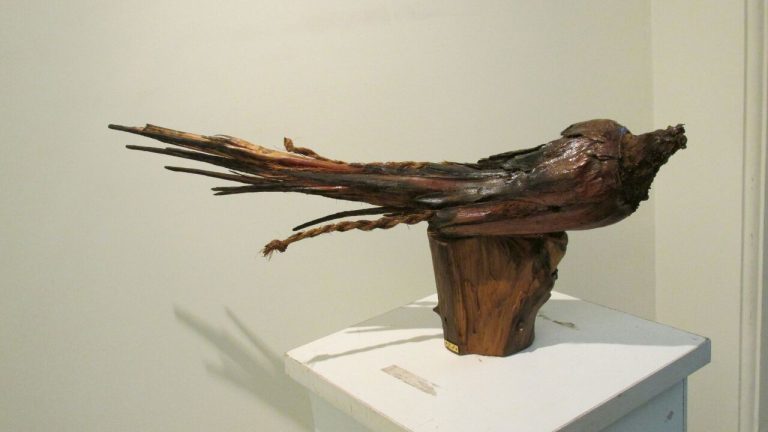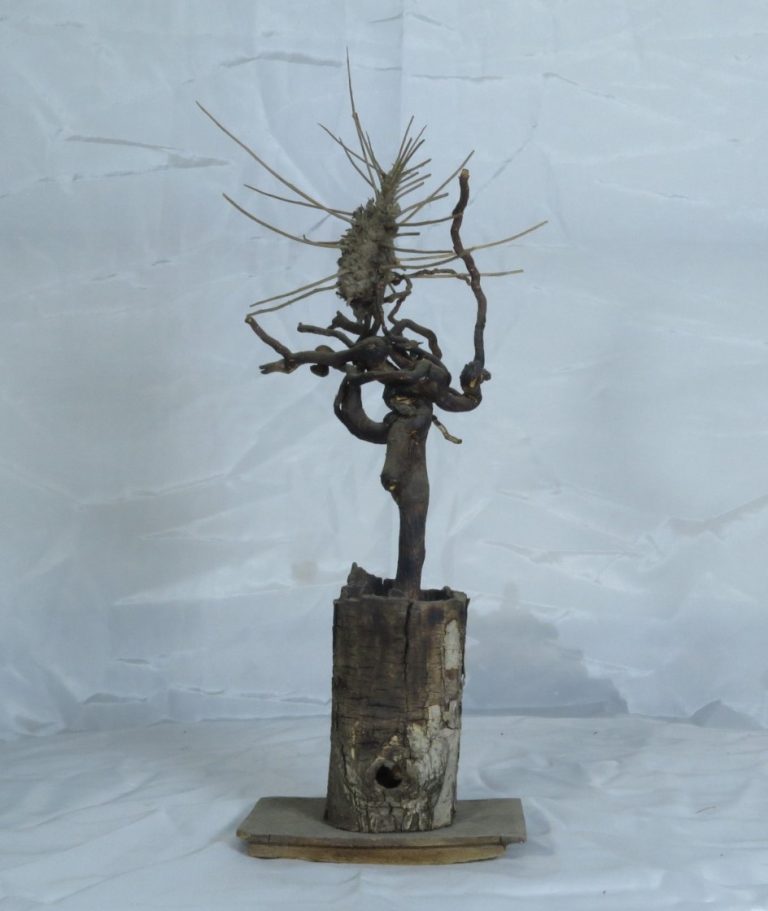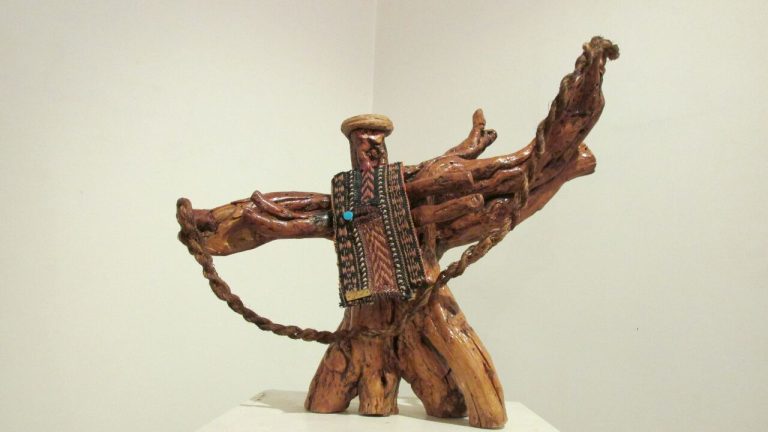
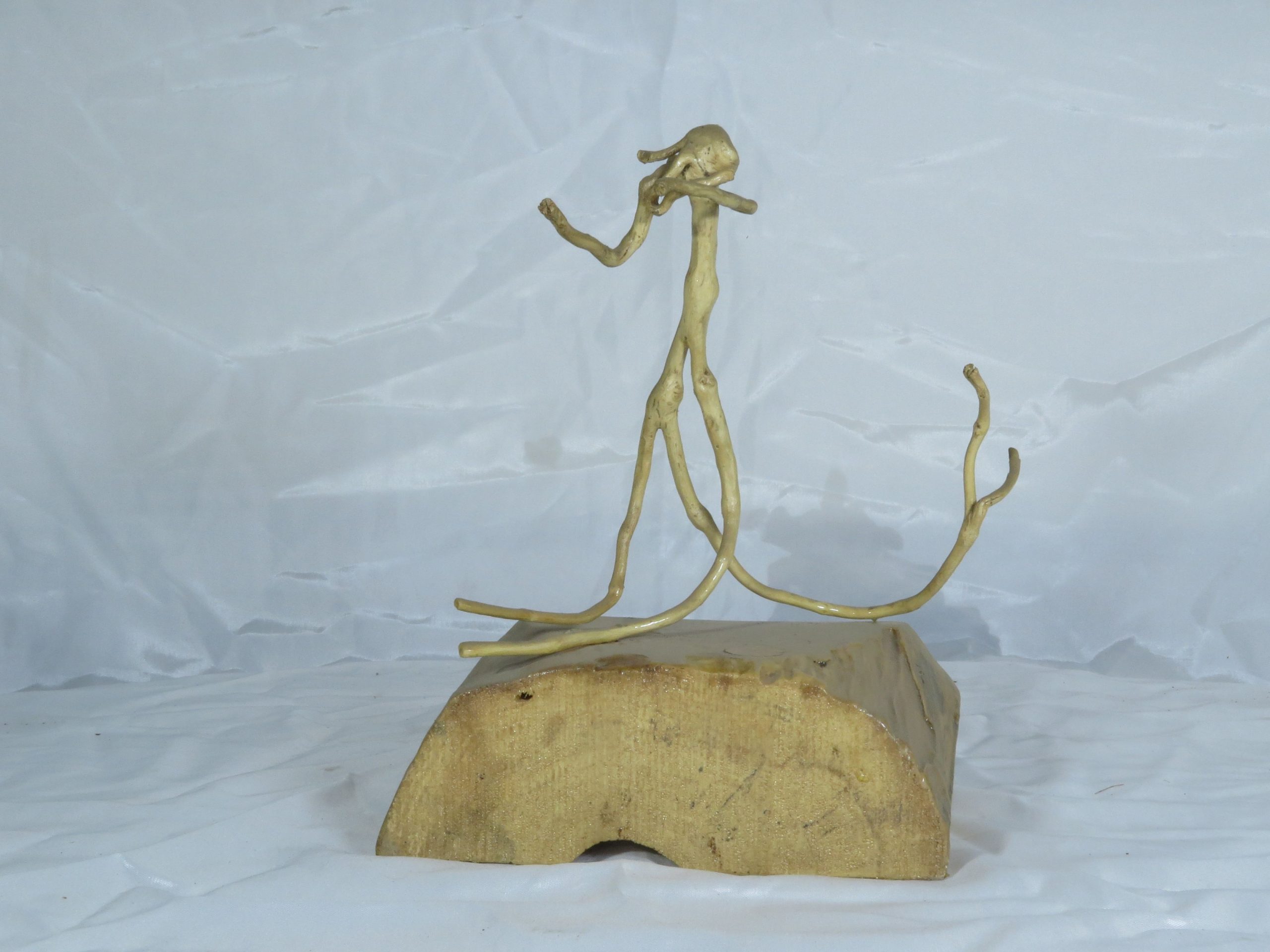
Description: A thin, twisted form, head lowered, caught in the middle of escape and endless doubt. *The Breath of Shame* represents the bodily manifestation of embedded shame—a moment where one can neither hide nor dare to be seen.
Form and Structure
The Breath of Shame presents a figure that, with minimal intervention and utmost sincerity, appears both standing and shrinking, both present and vanishing. It is a stretched, coiled body—like a wavering line drawn by a hesitant hand. The form is deceptively simple yet deeply evocative, portraying the human body as a tree bent by the weight of inner shame.
This static yet trembling form holds the viewer in suspense: not fleeing, not surrendering. Its placement on a raw wooden base enhances the contrast between the grounded material and the psychological instability of the form—as if it has roots, but wishes not to be.
Theme and Philosophical Perspective
The Breath of Shame is not merely about an emotion—it is about an existential state. It captures that moment when a person collapses inwardly, avoids mirrors, averts the gaze of others, and cannot bear to see even themselves.
Shame here is not just personal—it is a collective yet hidden experience. Rafati shows how the body can become the voice of suffocated emotions. This figure speaks for those who have retreated inside themselves and live in the silent realm of solitude.
Material and Technique
Natural wood—separated from the forest but still carrying the memory of trunk and branch—is the perfect medium for expressing such a state. Rafati’s technique is based on minimalism: less carving, less manipulation, more listening to the voice of the material itself.
The final form feels less like the artist imposed his will, and more like a conversation: the wood has been allowed to speak. The result is a figure that does not shout at the viewer—it quietly engages them with its bowed gaze.
Emotional Impact
At first, this sculpture seems quiet—but over time, it fills the mind like the scent of wet soil. It’s one of those rare works that lingers more as a feeling than as a visual memory. Not because of technical complexity, but because of the sincerity embedded in its simplicity.
This unassuming figure prompts reflection on the moments when you lowered your head—when you wanted your presence to be less visible. This work does not merely depict shame; it reminds us of it.
Conclusion
The Breath of Shame is neither decorative nor declarative—it is a sigh made solid. This figure exists quietly, yet stirs within. It reminds us that shame is part of our being—and perhaps the only way to face it is to embrace it. A work that invites the viewer to listen to an unspoken whisper within: Are you still ashamed of yourself?