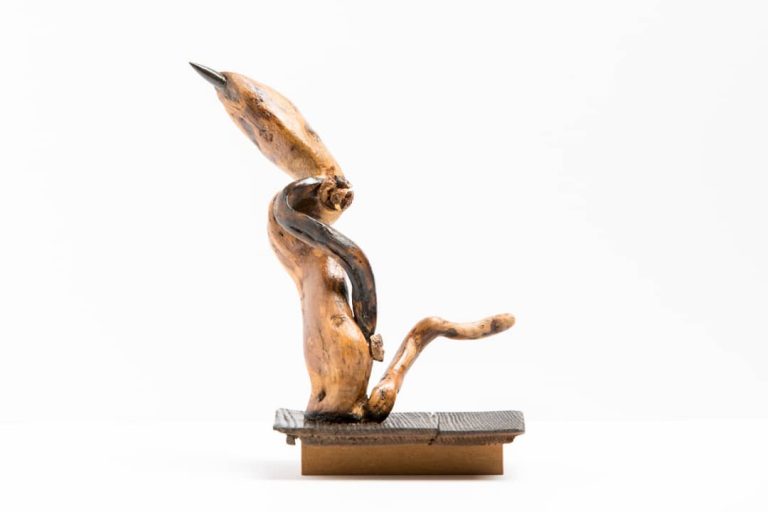
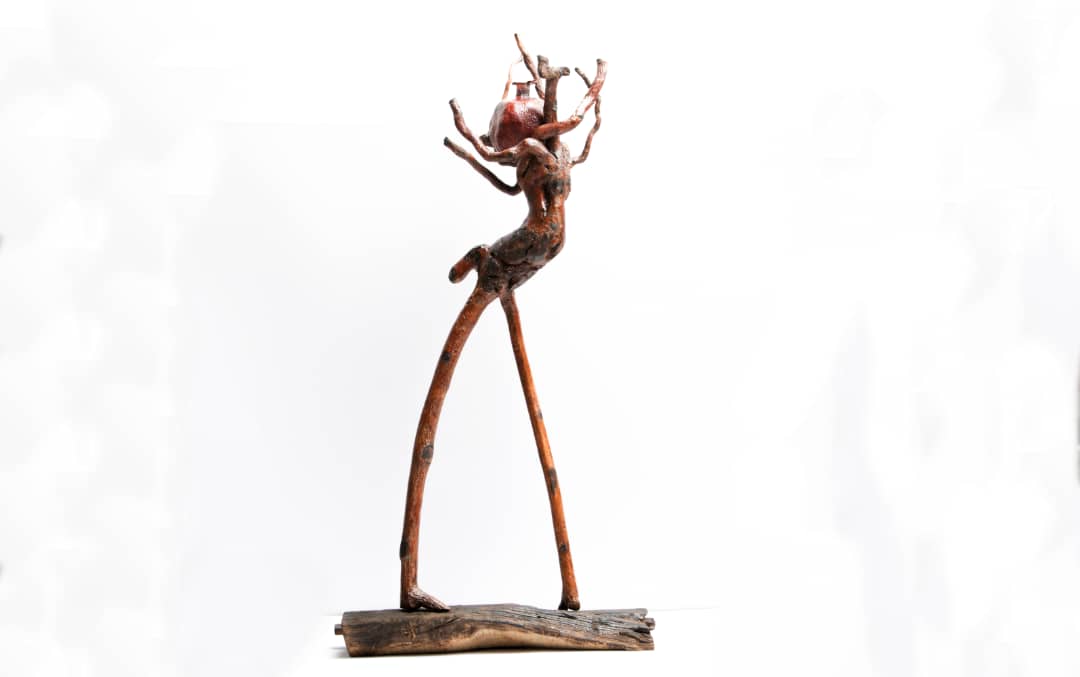
Description: This sculpture portrays a humanlike figure exerting its full being to reach a withered pomegranate—a former symbol of life, now shriveled and dry. The elongated legs, animalistic tail, and straining limbs evoke an exaggerated desire for something that no longer lives. The work critiques the deceit that can lie within desire itself: where striving leads not to salvation, but to the death of meaning.
This sculpture is built on a sharp visual and symbolic contrast. A stretched, twisted, humanlike figure stands tall on a base—its exaggeratedly long legs anchoring a body that seems to strain upward, reaching for something suspended above: a shriveled, dried-out pomegranate. Once a symbol of life, it now hangs lifeless.
From the torso emerge multiple outstretched arms—extended in desperation toward the fruit, as if the entire being exists for the act of reaching. Below, a small protruding tail suggests something primal or instinctual—an animalistic force beneath the gesture of aspiration.
Theme and Conceptual Depth
The title, Striving Toward the Death of Life, reframes what at first seems like an act of pursuit or hope. The sculpture doesn’t depict reaching for life—it shows a misguided longing for what has already died.
- The pomegranate, classically a symbol of fertility, abundance, and vitality, is here dry and hollow.
- The figure reaches not for renewal, but for a memory, or a delusion of life.
- Its exaggerated limbs and imbalance suggest that obsession with a goal—when unexamined—can become absurd or even tragic.
The tail at the base underscores this: desire is not always noble. Sometimes, it’s blind instinct.
Materials and Symbolic Language
The sculpture’s body, made from natural wood, painted in warm tones and marked by dark veins, carries the weight of exhaustion and futility. The pomegranate is real—and its presence anchors the metaphor. It is not idealized. It is decayed. And yet, it remains the object of worship.
The work’s material contrast—between wood’s warmth and the fruit’s dryness—creates a duality: a living effort aimed at a lifeless goal.
Emotional and Psychological Resonance
The sculpture is both comic and tragic. Its physical exaggeration draws attention—but the longer you look, the deeper the tension becomes. The viewer begins to feel the sadness of the pursuit, the hollowness of effort that ends not in life, but in disappointment.
It asks quietly:
What are we chasing with such urgency?
And is it still worth reaching for?
Final Reflection
Striving Toward the Death of Life is not a celebration of effort. It is a critique of misdirected longing. In a world obsessed with ambition and achievement, this sculpture asks us to pause—and to question what we are so desperately trying to touch.
It is not a condemnation of desire—but a meditation on what happens when the object of desire has already died