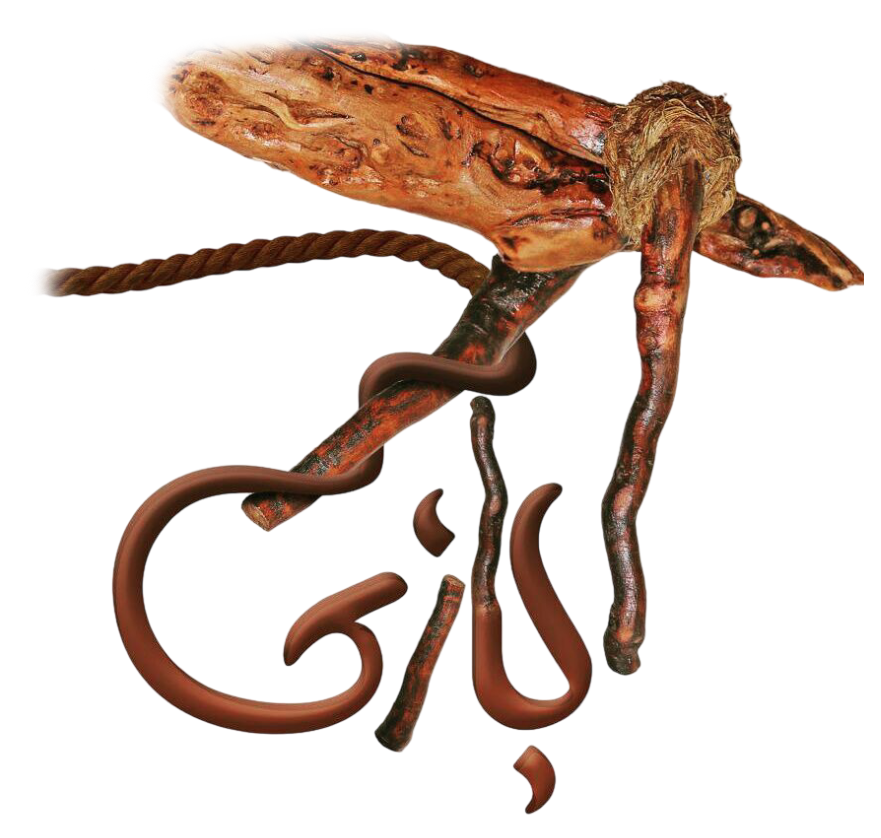
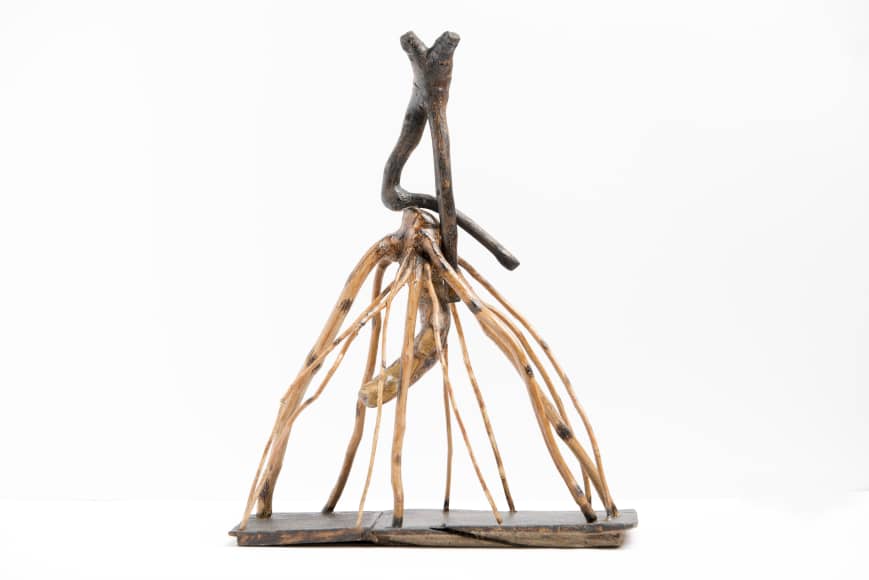
scription: A human-like figure sits motionless atop a cage-like structure made of roots, seemingly resigned to its confinement. The piece evokes themes of acceptance and imprisonment, self-made boundaries and quiet submission.
This sculpture portrays a solitary human figure sitting atop an organic, root-like structure — a cage not made of steel, but of nature, history, or perhaps belief. These “roots” rise not to nourish, but to restrain. They form a tangled architecture that blurs the line between growth and confinement.
The figure sits cross-legged, its back turned to the viewer, its face unseen — a posture that evokes withdrawal, surrender, or silent endurance. It is neither physically restrained nor visibly bound, yet its stillness feels absolute. It suggests someone who does not actively resist, but who has submitted to an inner captivity.
This piece challenges a subtle yet powerful idea: what once grounded us can turn into what entraps us. Traditions, identities, ideologies — even internal beliefs — may begin as sources of stability, but over time, they can become cages built of habit, fear, or inherited silence.
Seated on the Roots of Captivity is a quiet, philosophical work. It does not shout. It contemplates. And it asks the viewer: Are you sitting atop your own prison, believing you are free?