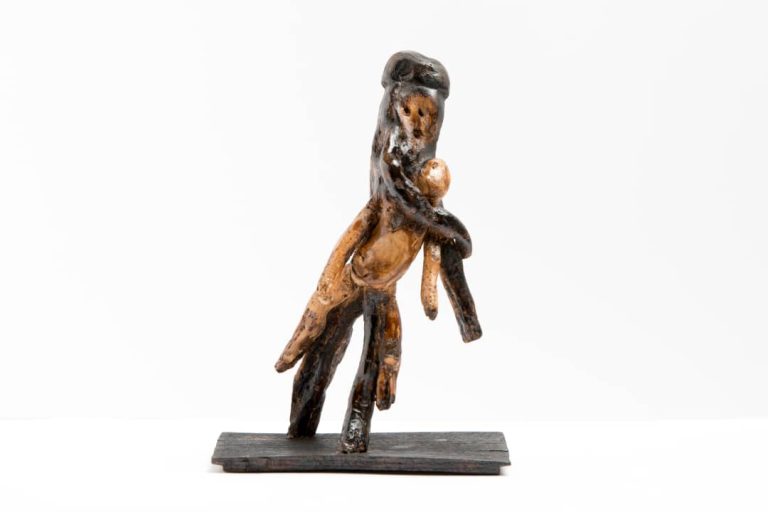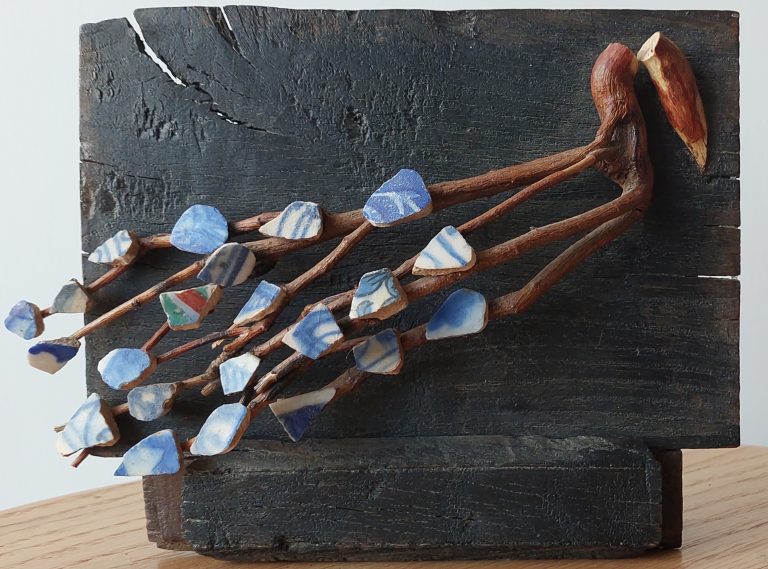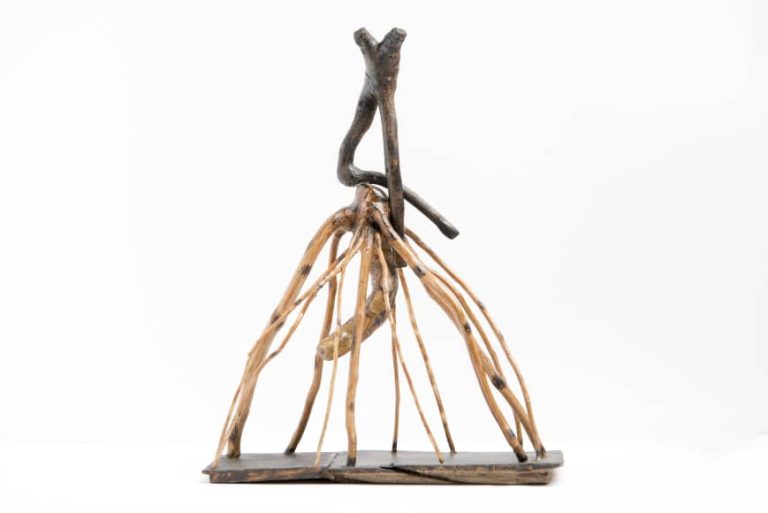
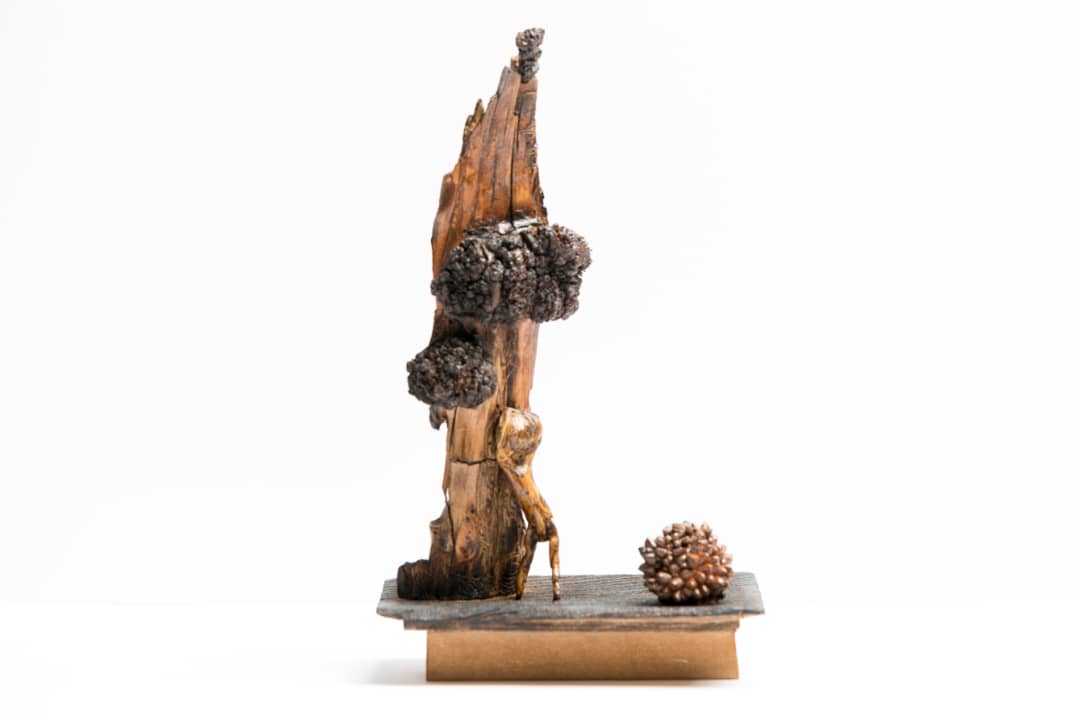
Description: This sculpture reflects the era of COVID-19—not only as a disease, but as a metaphor for widespread toxicity across human dimensions. A blighted, tumor-like trunk, a frail figure leaning upon it, and a spiked spherical form representing the virus compose a triad of suffering—neither forgotten, nor truly over.
This piece stands quietly on a raw, unpolished base. A vertical, scarred piece of wood—like the withered trunk of a dead tree or the memory of something that once stood strong—rises at the center. Upon its surface, dark, tumor-like clusters have formed—organic deformities, growths of something deeper.
Beside this decaying trunk leans a small, faceless human figure—fragile, bent, defenseless. On the lower platform, a spiked, spherical form rests silently, unmistakably referencing the coronavirus. All elements here feel diseased, muted, and inwardly focused.
Theme and Underlying Narrative
This sculpture is not merely a depiction of illness—it is a metaphor for the poisoning of humanity. It speaks of the COVID-19 pandemic not just as a medical event, but as a spiritual and emotional collapse. Humanity in this work is not just sick—it is wounded in its essence.
The infected trunk represents once-trusted pillars—nature, society, systems of support—now corroded. The small human figure clings not with hope, but with resignation. And the virus, though physically apart, remains present, threatening, and close.
Material and Execution
The use of natural wood, textured dark clusters, and organic forms gives the piece a visceral, almost biological language. It doesn’t feel sculpted—it feels discovered, like an artifact dug up from the ruins of a diseased world. Each material bears not just form, but experience.
Emotional and Psychological Impact
This is a sculpture not to be looked at, but to be felt. Its silence is overwhelming. It neither shouts nor conceals—it simply stands, like a scar, like a witness.
In a world eager to move past the trauma of the pandemic, this piece remains—a reminder of what should not be forgotten. A remnant not just of a virus, but of how deeply it scarred our sense of humanity.
Final Reflection
Remnant of the Ravage is a sculpture of a time—but more than that, it is a sculpture of a condition: a human being, wounded, alone, clinging to the remnants of meaning in a poisoned world. This work doesn’t offer resolution. Instead, it asks:
Have we truly emerged from the ravage—or have we simply buried the memory of it?