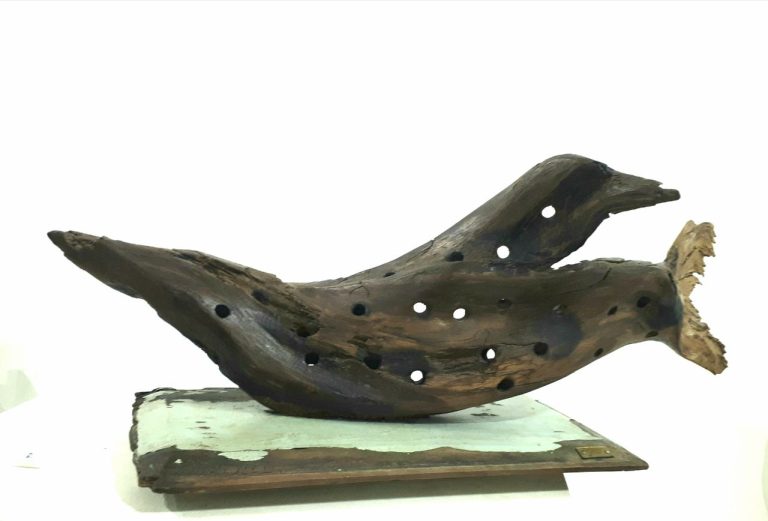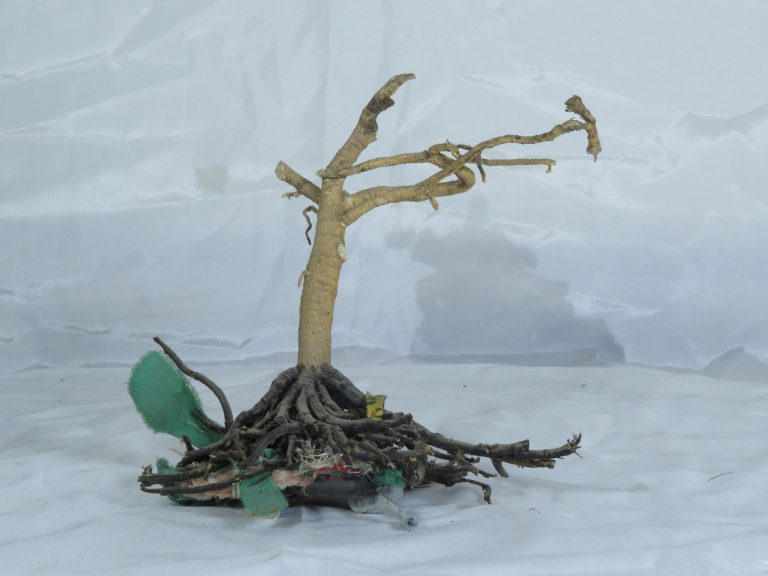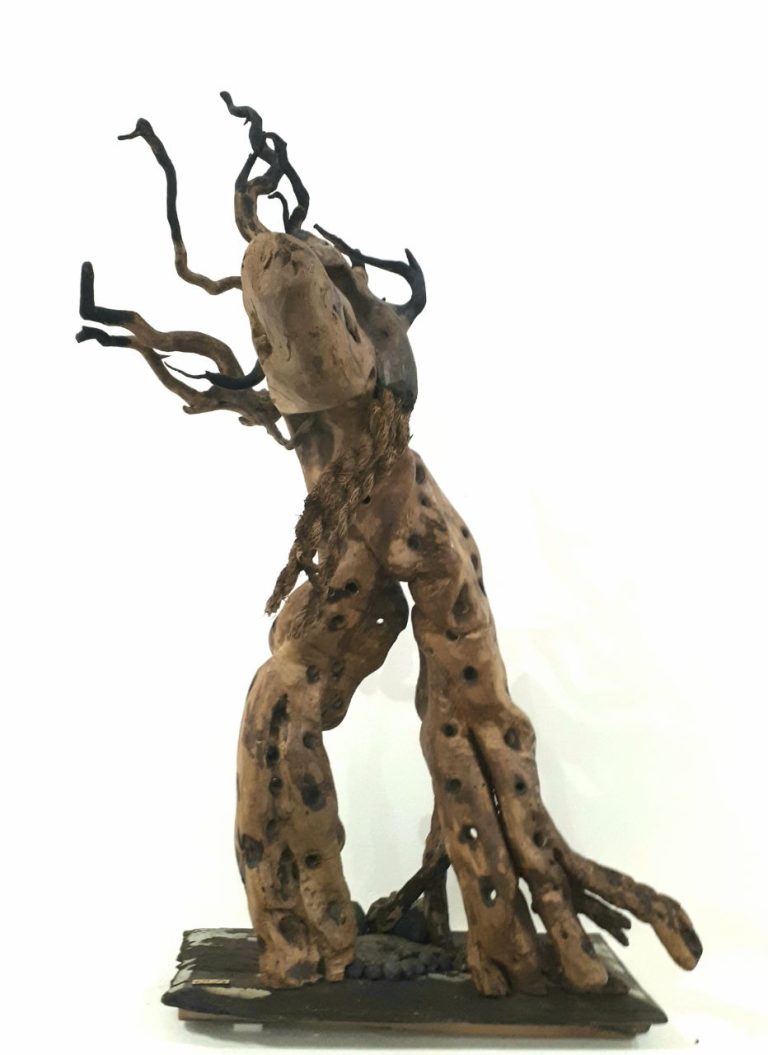
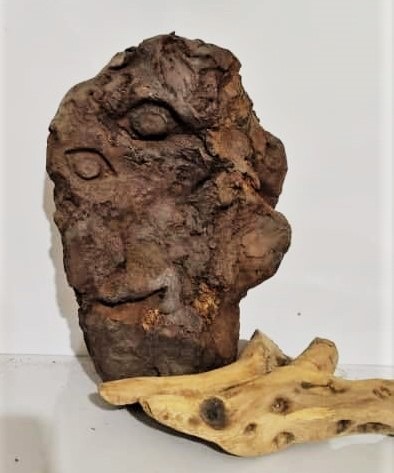
A semi-human face emerges from rough, raw wood, with closed eyes and an indistinct mouth. The piece feels neither fully crafted nor fully found—as if the wood has taken human form, but in a broken, alienated identity. This sculpture tells a story of internal estrangement, where one appears human, but is no longer oneself.
Form and Structure
This sculpture is shaped from rough, burned natural wood, with minimal manipulation yet a deep sensitivity to the facial suggestion within the material.
With closed eyes and a muted mouth, it lacks softness or geometry—it’s as if the wood has chosen to resemble a human form, but unwillingly.
The brighter base wood forms a visual pedestal, elevating this “identity without self.”
Theme and Philosophical Lens
Me, But Not Myself is about alienation—the moment when one still has a face, but no longer an inner self.
Here, metamorphosis is not physical but existential.
The being we see appears hollowed-out, its essence disintegrated, yet its shell remains.
It captures the silent struggle of living in a shape that no longer fits the soul—a reluctant acceptance of what one has become.
Material and Technique
The harsh, untreated grain of the wood speaks of pain all by itself.
The artist has “discovered” more than constructed, allowing the material to speak.
This minimal interference turns the wood into a self-expressing subject—telling its story on its own terms.
Emotional Impact
At first glance, the viewer sees an unrecognizable face—but soon feels the heavy silence within.
It’s not calm, not loud—rather, it reflects a frozen internal state.
The piece asks no questions and gives no answers; it just stands there—like we often do in life.
Conclusion
Me, But Not Myself is more than a wooden face—it’s a depiction of a being whose identity has faded but whose image still lingers.
A quiet, powerful piece that speaks volumes through its stillness.