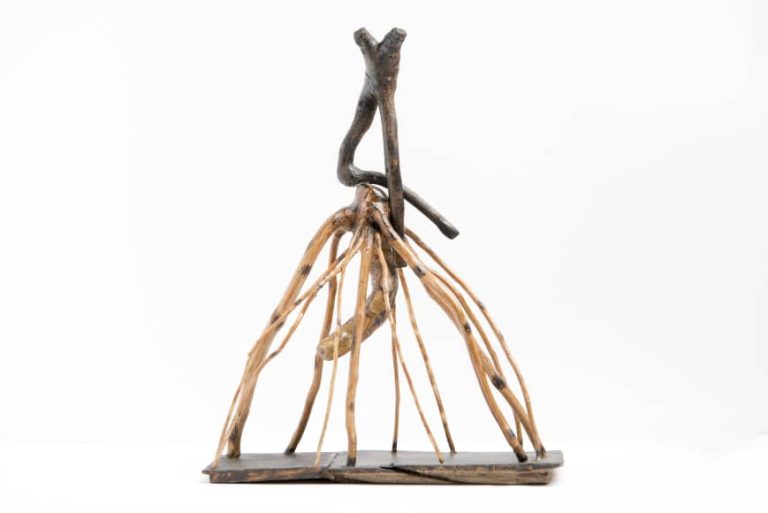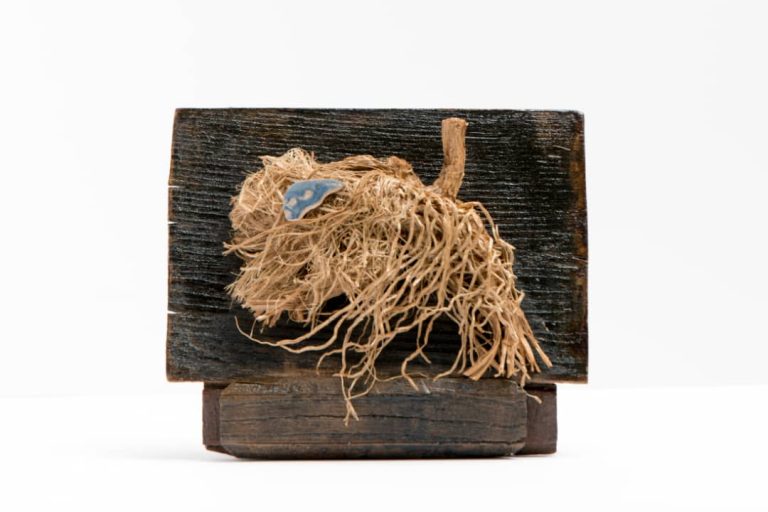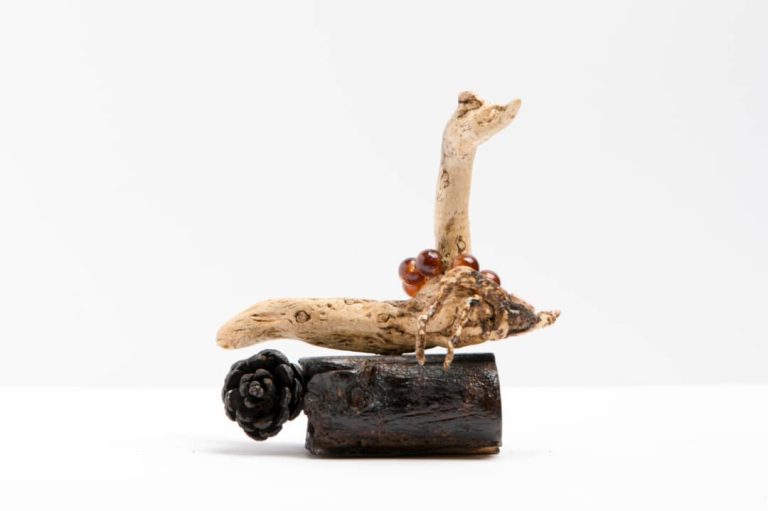
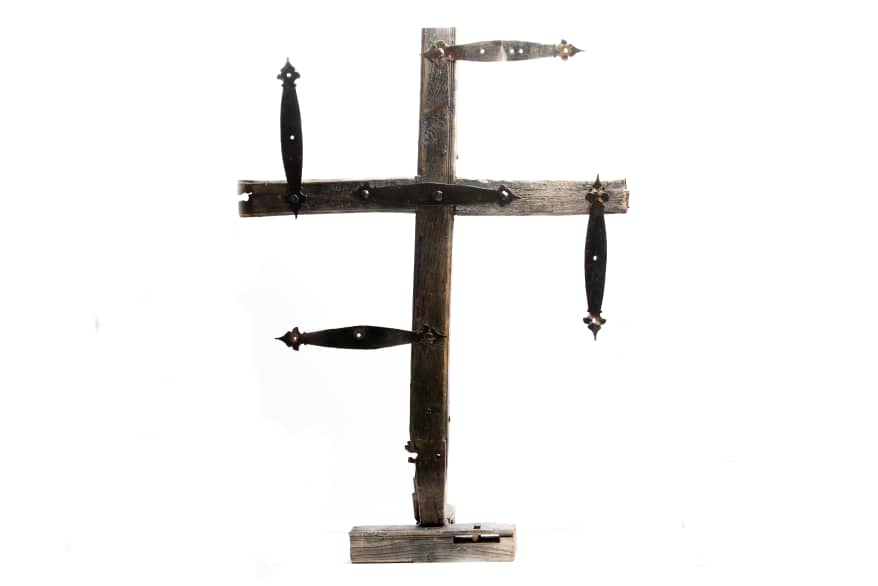
Description: In this sculpture, the cross moves beyond its individual, salvific form and becomes a rigid, repetitive, superstition-laden structure. The iron blades and fortified nails do not merely symbolize pain—they stabilize a system of unquestioned belief. This work is a critique of how superstition proliferates through ritualized and normalized forms.
Form and Structure
This work stands as one of the most transparent, cold, and yet conceptually rich pieces in the collection. Built from the simplest religious symbol—a cross—it is stripped of salvation and clothed in repetition, rigidity, and silence. The aged wooden form stands upright, flanked by sharp, iron blades—rigid, symmetrical, and functional. These are not decorative, but symbolic of fixation, control, and latent violence.
There is no grace here, only structure. No body to be saved—just a frame that insists.
Theme and Philosophical Direction
At first glance, this might resemble a sacred object. But upon closer inspection, the cross becomes something else entirely:
- A shape repeated without meaning.
- A structure that does not liberate but entraps.
- No longer individual, but collective and systemic.
This sculpture boldly states: Superstition has become institutional. What began as belief has ossified into form—form that replicates, persists, and reproduces itself across minds and generations. The sacred has collapsed into spectacle. The divine has become machinery.
Material and Visual Language
The cracked, desaturated wood bears the weight of erosion and time. Iron blades—cold, industrial, impersonal—anchor the work into the realm of systemic ritual. Nails pierce not flesh, but consciousness. It is a minimalist structure built not just of materials, but of history, fear, and repetition.
Emotional and Psychological Resonance
This sculpture neither threatens nor soothes. It remains. It stares back at the viewer in stillness—provoking not emotion, but thought.
It asks:
Are the symbols we revere still meaningful?
Has ritual replaced understanding?
Have we become crucified by the very structure we built to save us?
In its silent form, the work whispers these questions, and lets them settle.
Final Reflection
Crucified by Repetition is a meditation on the gradual death of meaning. A cross once meant to carry hope now bears the weight of an empty system. In a world where performance overshadows reflection, this work is a pause—a still moment that compels inquiry. There is no redemption here. Only repetition, metal, and silence.