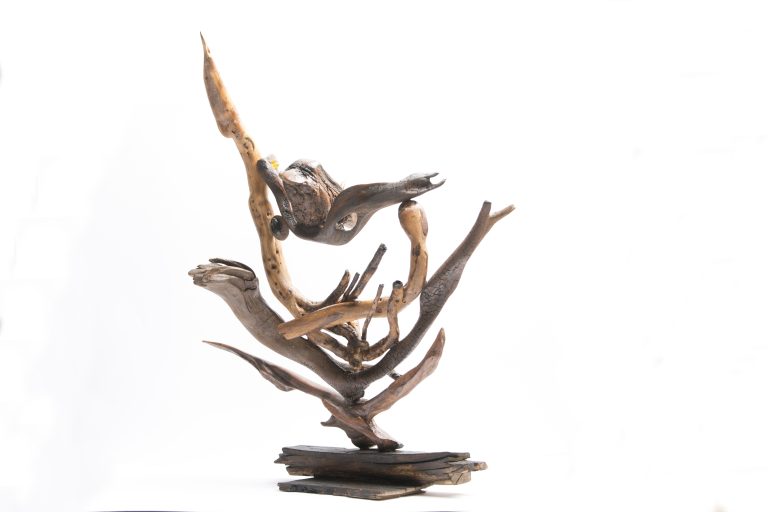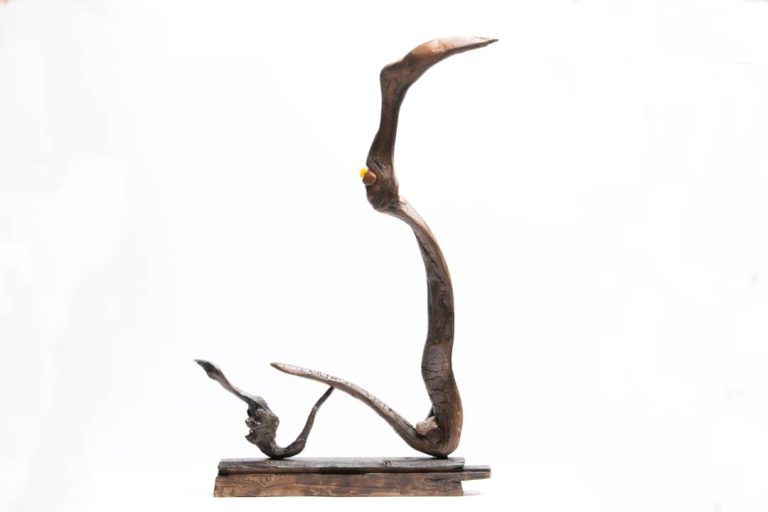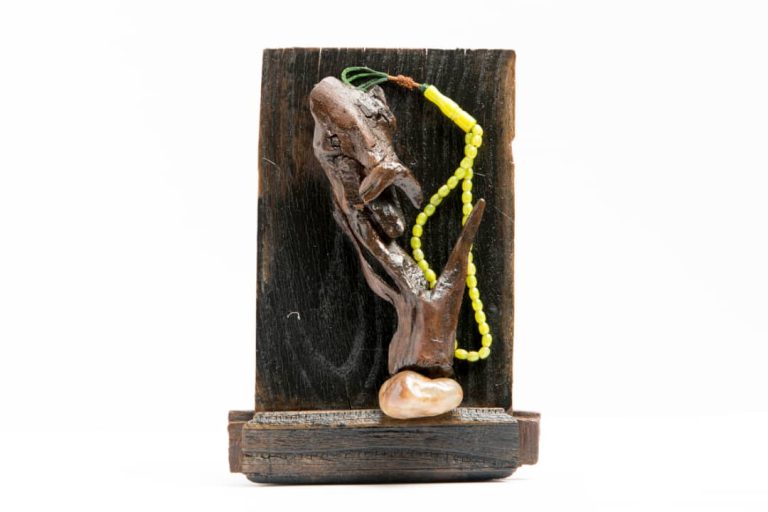
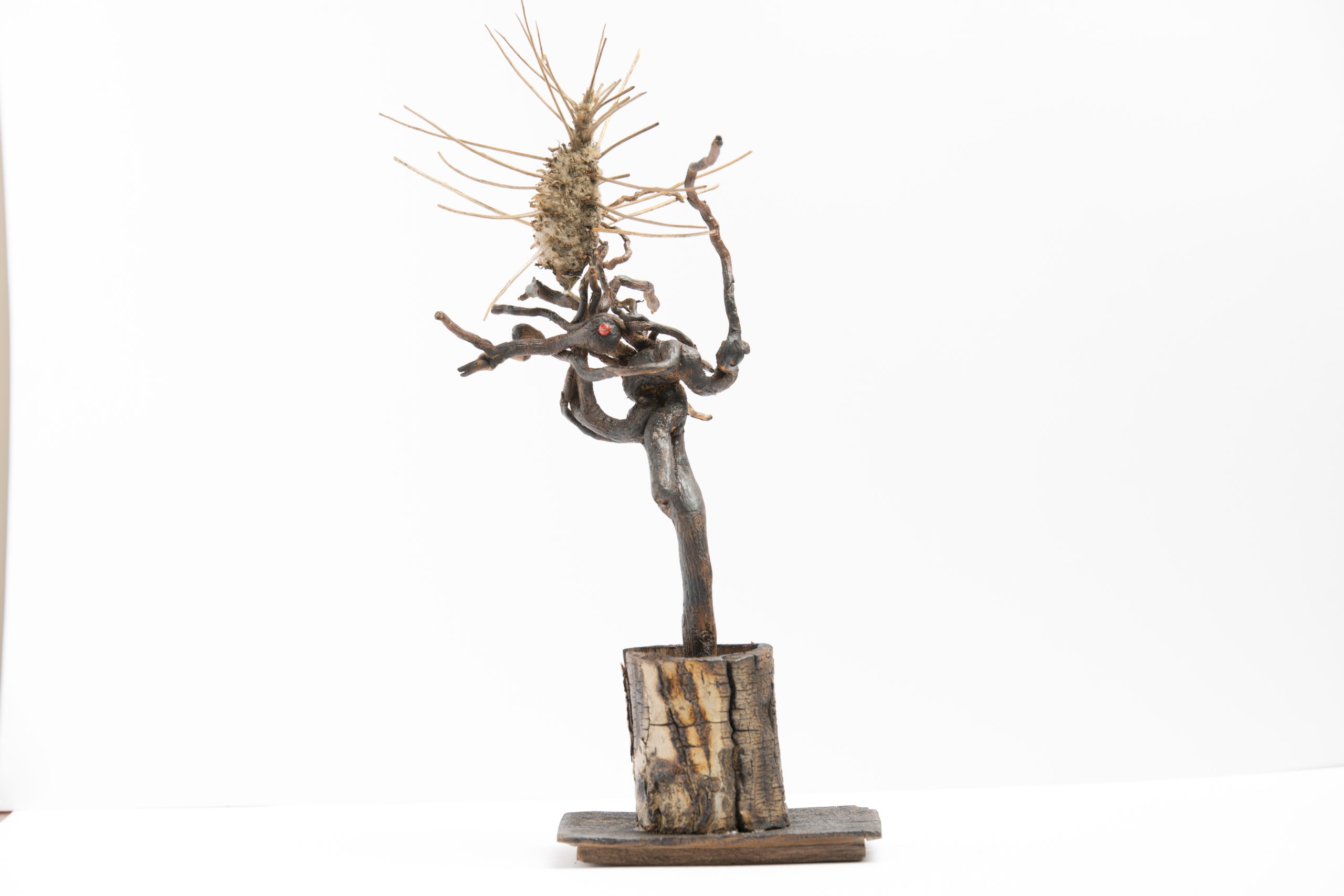
Description: A depiction of slow collapse — a wounded tree-body crowned by a spiked virus form. More than a symbol of the pandemic, it is a sculpture about the accumulation of suffering, about endurance under invisible siege. It is not just about disease, but about surviving while burning from within.
The sculpture Crowned by Calamity is a visual language for both collective and personal trauma.
A dried, lifeless tree — a body turned brittle — and at its highest point, not a fruit nor a blossom, but a thorny, spiked crown, evoking the form of the coronavirus.
Though the virus dominates the form, this work is not merely about COVID-19 — it is about accumulated pain, layered affliction, and the gradual collapse of the modern human spirit.
Structure and Form
The sculpture is vertical — upward facing, but not hopeful.
Its twisted branches mimic inflamed veins or overstrained nerves.
The upper “crown,” made of thorn or seed forms, is symbolic:
The most eye-catching part is also the most poisonous.
There’s irony in how beauty is replaced by a biological threat — a reminder that even nature, when infected, can betray.
Message and Psychological Context
The artist states:
“To my countless miseries, the virus was added as well.”
This line is not a caption — it’s a confession.
Here, the crown is not a mark of victory, but of grief that rules the body.
COVID arrives not as an isolated tragedy, but as the latest addition to a long lineage of wounds.
The sculpture speaks of a body already cracked, already tired — and now claimed by something invisible yet absolute.
Emotional Impact
The viewer doesn’t just see a tree — they feel the weight of shared pandemic experience, and even more, the crushing accumulation of quiet traumas. This piece doesn’t scream — it lingers, in the lungs of the soul.
“Every new sorrow is simply another load on the back of someone already bruised.”
Final Reflection
Crowned by Calamity is not a sculpture of a beginning — it is the portrait of pain already in progress.
It speaks of a human figure who is still standing, yet bent; still alive, yet marked by rot.
The crown it bears is not glory — it is a silent history of collapse, still unfolding