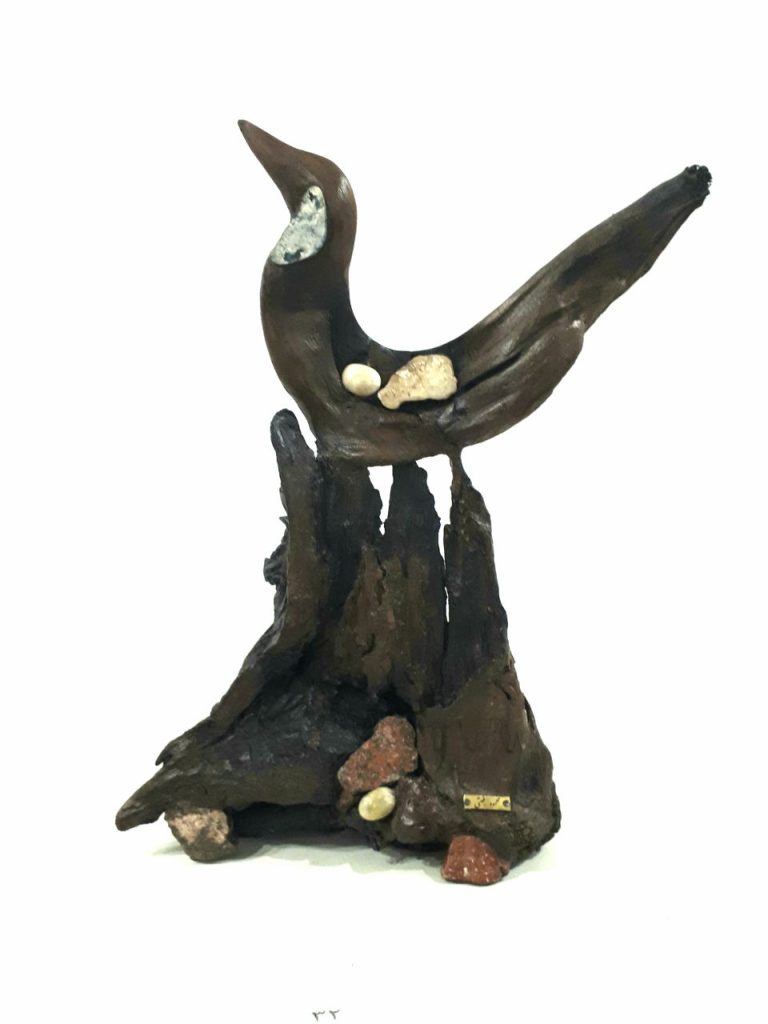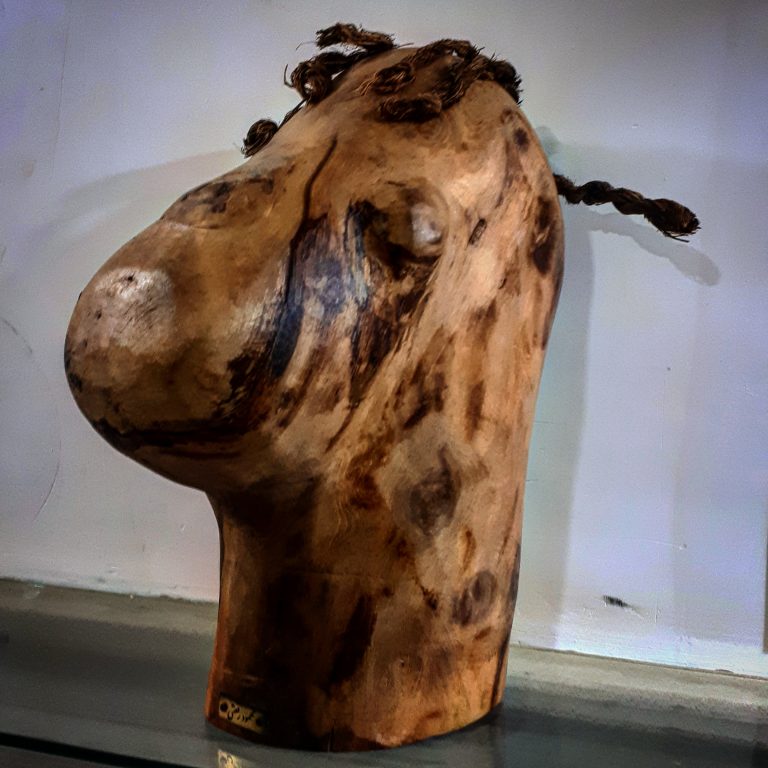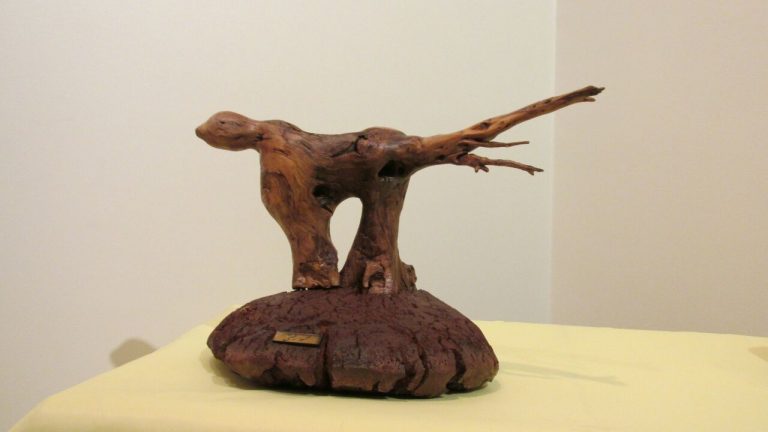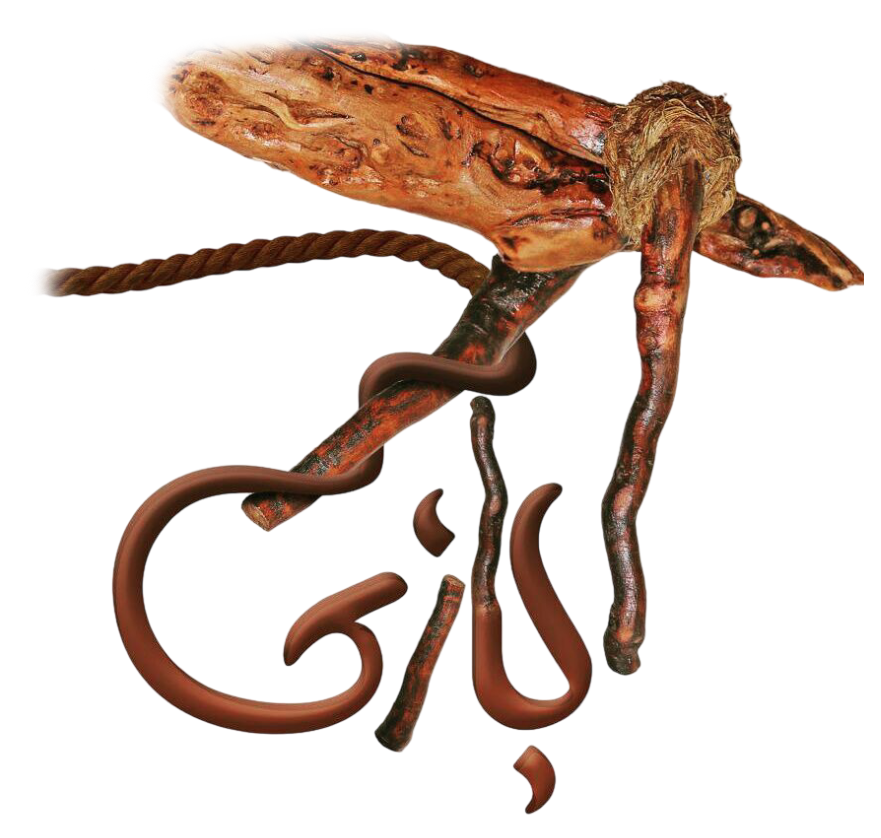
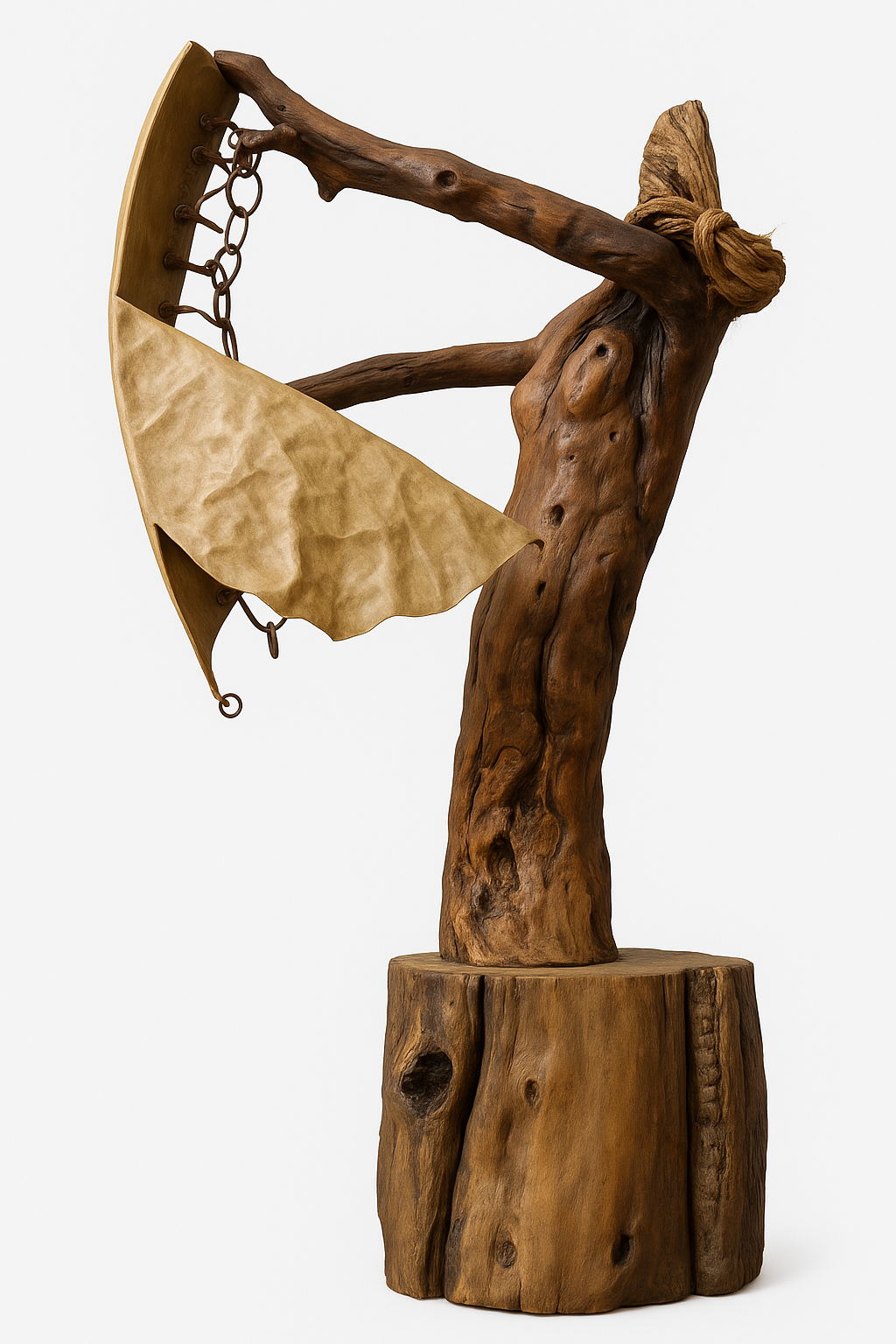
A stiffened figure, carved from scars, holding a torn musical instrument chained in its grasp. It is neither a player nor a listener—only a silent witness to a crime against melody. The drum no longer sounds, its skin torn, its beat silenced before birth. The ropes and chains are not merely tools of restraint, but metaphors for powers that fear rhythm, freedom, and voice. This sculpture is an elegy for the music that was never allowed to live.
Form and Structure
A wooden figure stands tall, a silent witness to a crime against music. One long arm extends forward—not to offer, but to surrender a wounded instrument.
The drum, or what remains of it, is no longer an object of sound, but of suppression. Chains strip it of its identity.
The thick, scarred trunk and coarse base evoke the forced endurance in the face of artistic erasure.
Rather than movement or melody, the form conveys stillness and suffocation.
Theme and Philosophical Lens
This sculpture speaks of a silence that is imposed—not from weakness, but from fear.
In a world where a drumbeat can be as threatening as a slogan, music becomes the enemy.
Rafati transforms the drum into a symbol of freedom of expression—a voice torn but still crying out from within its chains.
Here, music is not merely art, but the right to be heard—a right deliberately restrained.
Material and Technique
The natural wood, rough and scarred, carries the residue of violence.
The torn drumskin resembles a wounded body.
Chains rob the instrument not only of sound but also of dignity.
The twisted ropes resemble nooses—tools not just for restraint but for silencing. They become symbols of oppression.
Emotional Impact
On first encounter, the work conveys suffocation and grief.
No scream, no motion—only a silence woven with pain.
The viewer sees a torn drum but hears its sound internally—a sound that must not be played.
That absence of sound becomes more deafening than any cry.
Conclusion
Chords Bound, Skins Torn is not only about music—it is about the fear of it.
This sculpture speaks for voices silenced not by fragility, but by the threat they posed.
With this work, Rafati offers not a lament for a drum, but an elegy for freedom.