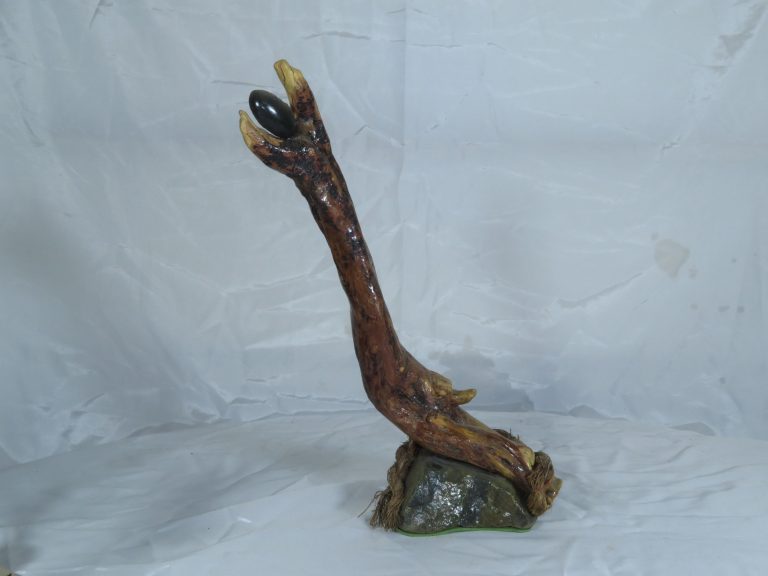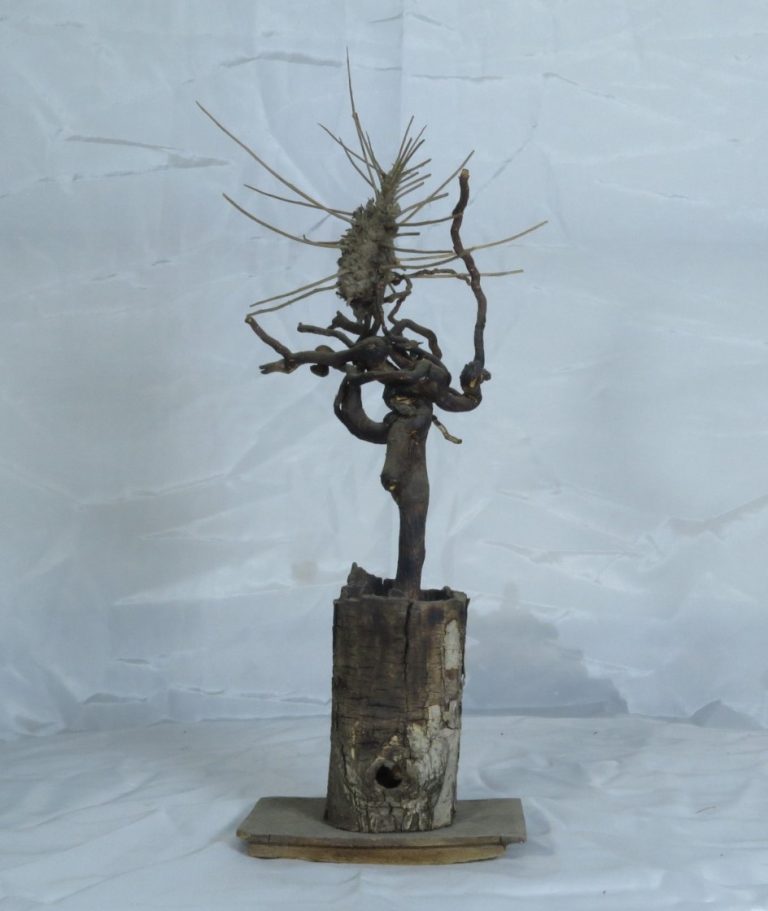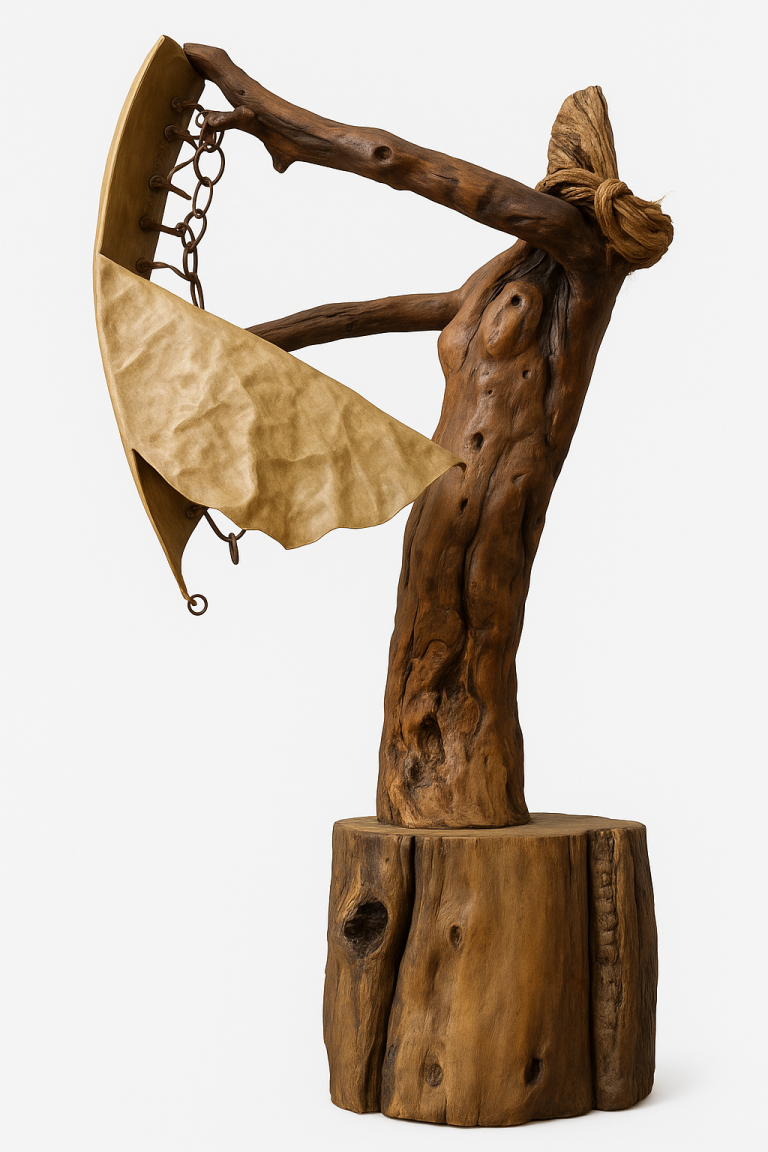
Description: An upright yet silent form, scorched and polished. *Ascent Interrupted* depicts a human pull toward liberation—reaching upward while still grounded. A halted motion, yet still alive.
Form and Structure
Ascent Interrupted stands on a wooden base—but it itself never fully stands.
The form is elongated, twisted—like a being in the act of rising, yet frozen just before liberation.
Its surface is scorched and polished, dark and reflective. At first glance, it may resemble a tree stretching toward the sky. But soon, it reveals itself as a figure halted mid-motion—suspended between motion and stillness, yearning and restraint.
Theme and Philosophical Perspective
This sculpture tells a story of the human condition: the desire to ascend, to break free, to become more—interrupted.
Ascent Interrupted speaks to everyone who has longed for something deeply, struggled toward it, and yet—paused. Not necessarily failed, but stopped. In a moment that is not defeat, but a still-alive desire unfulfilled.
It is the metaphor of the incomplete journey—the ache of potential not yet realized.
Material and Technique
Rafati uses natural wood once again, but this time with scorched finishes and glossy surfaces. This duality—burnt yet shining—amplifies the inner conflict: striving through suffering.
The simplicity of the piece is deceptive. Every curve, every mark, carries weight. The wooden base, anchoring the figure, becomes both support and prison—holding it in the moment of almost.
Emotional Impact
The sculpture evokes a unique emotional tension: the stillness inside motion.
It does not depict victory, nor does it mourn defeat. Instead, it rests in the middle space—where most lives are lived.
It prompts internal questioning:
If the ascent began, why did it stop?
Was it fear? Or fate?
Is there still a chance to continue?
It is not a cry for help—it is the breath before the next step. If that step ever comes.
Conclusion
Ascent Interrupted is a sculpture of tension, of almost, of not yet.
It captures the profoundly human moment when we reach, but don’t arrive—when we hope, but hold back.
Rafati doesn’t show us success or failure.
He shows us that essential pause—where meaning often hides.
In the waiting. In the stillness. In the hope.