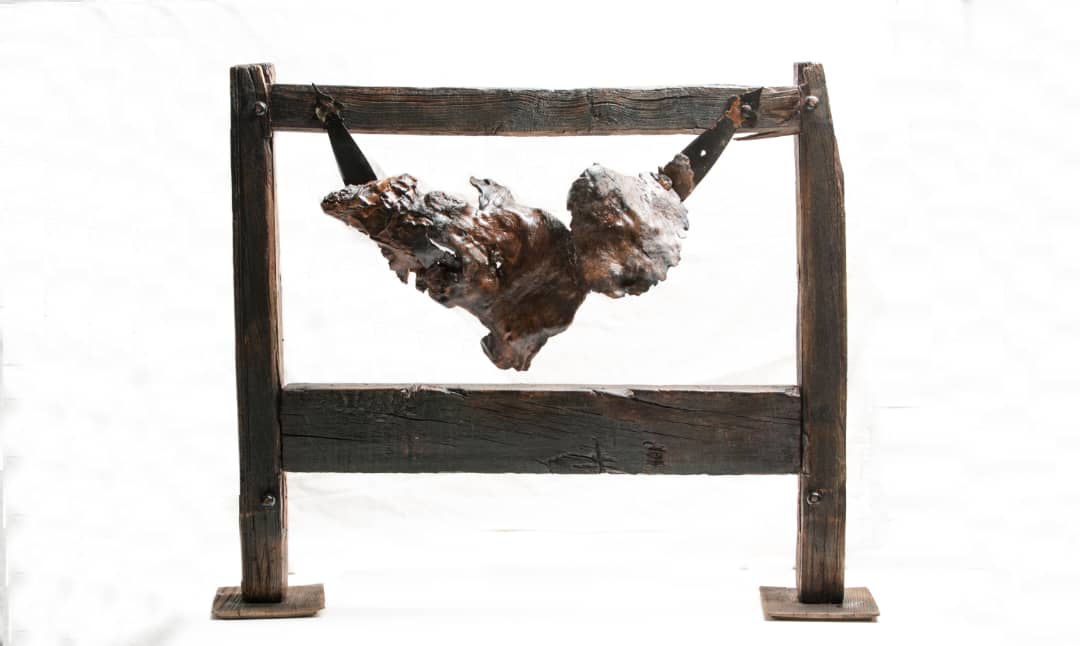
Description: This sculpture tells the tragic, recurring story of the savior turned sacrifice. A fractured form that once bore the cross and is now crucified upon it. The cross is no longer a symbol of salvation—it is the frame of judgment and suffering. In solemn silence, the work captures the collision of faith, selflessness, and collective cruelty.
Within a rough, earthbound wooden frame hangs a broken, burned, and suspended form. Its material appears to be charred wood or some decomposed organic mass—it bears no clear human anatomy, and yet it carries the full weight of human experience. The form, faceless and incomplete, is suspended by two leather straps, hovering in the center of the frame—reminiscent of a crucified body.
The wooden structure evokes the shape of a cross—not sacred or divine, but worn, coarse, and merciless. A cross not of salvation, but of weight and finality. Here, sanctity has collapsed. This figure not only carried the burden of the cross but has now been sacrificed upon it. The repetition of pain, betrayal, and unacknowledged sacrifice makes this work deeply philosophical and emotionally potent.
Theme and Underlying Philosophy
The title “My Cross, Your Judgment” functions as a statement—biting, bitter, and reflexive. It combines vulnerability with indictment, pointing to the paradox of carrying a burden only to be punished for it.
In the conceptual line accompanying the work—
“I carried the cross, but was nailed to it”—
a profound, multi-layered anguish is revealed:
- Sacrifice does not always lead to salvation; often, it leads to self-destruction.
- The one who bears the pain of others—of society, of belief, of suffering—is often the one the same society will execute.
- This is a sculpture of the recurring crucifixion of the redeemer—a deeply human, historical, and psychological tragedy.
Material and Execution
Charred wood embodies time and trauma. The rough texture is not decorative—it is raw history. The leather straps not only suspend the form but symbolize bondage, burden, and the prolonged endurance of suffering. Each material is selected not for aesthetic harmony, but for its capacity to transmit the weight of sacrifice.
Emotional and Psychological Resonance
At first glance, the work is silent. But the longer one observes, the louder it speaks—not in outward screams, but in a subterranean wail. The voice of centuries of judgment, pain, and misunderstood generosity echoes from its stillness. This is a sculpture that doesn’t show grief—it embodies it. Not as narrative, but as presence.
It reflects the modern iteration of an ancient sorrow:
the one who tried to save… was crucified instead.
Final Reflection
My Cross, Your Judgment is not just a sculpture; it is a reckoning. A confrontation with the cruel irony of sacrifice. A mirror held up to a world that judges even those who carry its weight. There is no resurrection here—only raw, unresolved truth. This is not a call for pity, but for understanding.
Because sometimes, the savior is never saved