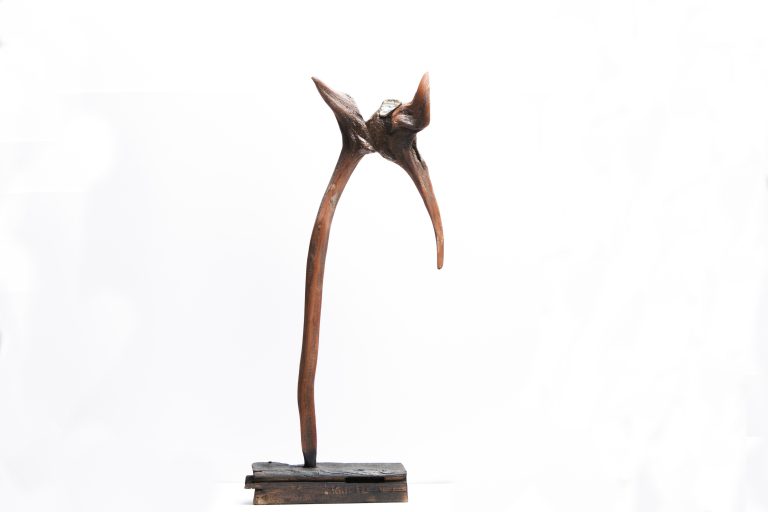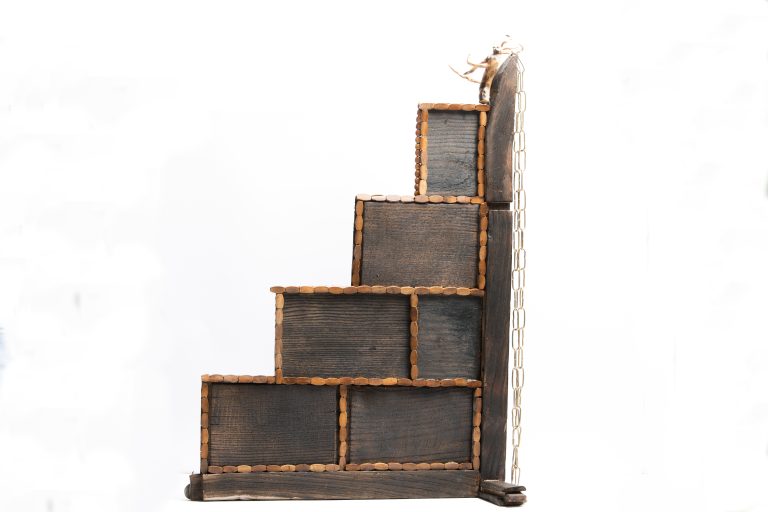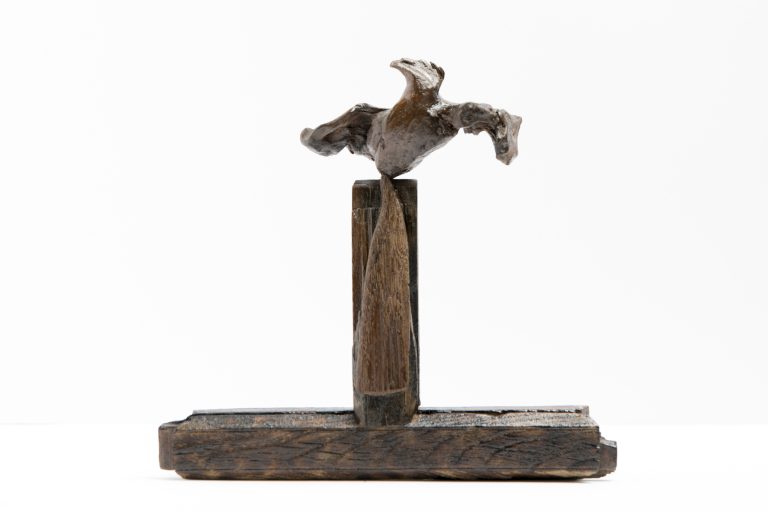
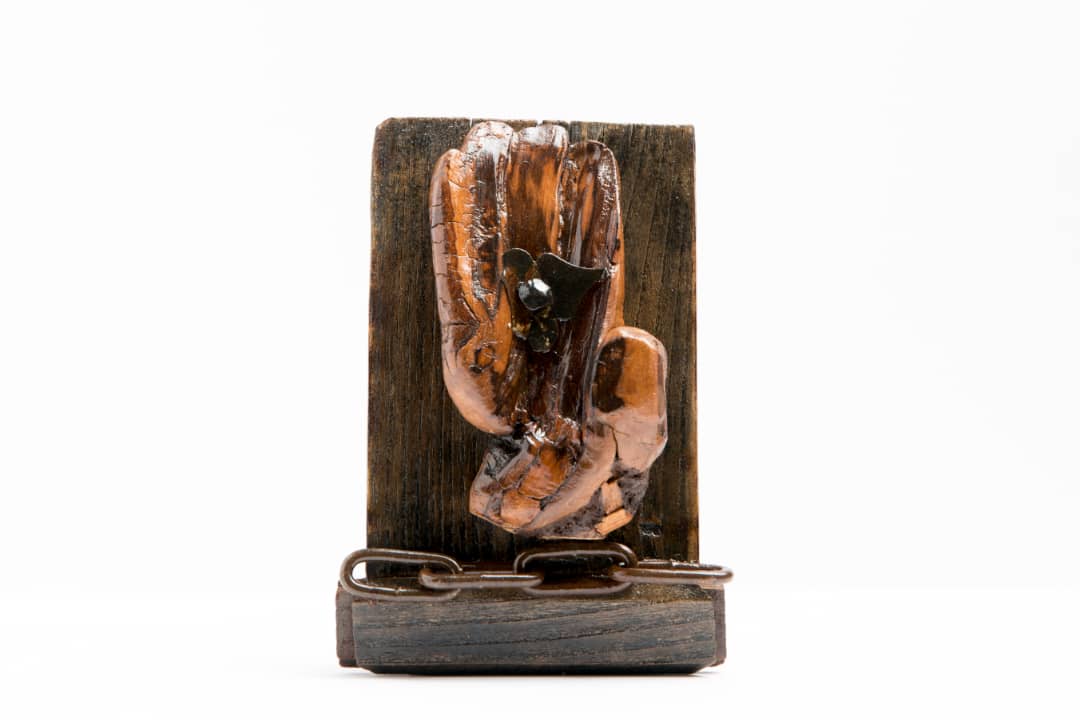
Description: Inspired by the ceremonial form of the ‘Alam’ hand in Shiite rituals, this sculpture tells of deception masked as holiness. The hand appears open and generous, yet it holds a trapped bird within—and the chain below represents not mourning, but mental captivity. This piece critiques the transformation of sacred symbols into tools of superstition.
At first glance, the sculpture evokes the iconic ‘Alam’ hand—a sacred, ceremonial object deeply familiar to Iranian Shiite culture. A raised hand, seemingly open for prayer, help, or blessing. But within this familiar form lies a striking contradiction: at the center of the palm, a dark, metallic bird is embedded—lifeless, trapped. And below the hand, an iron chain rests in still tension.
This composition is built upon the tension between appearance and truth. The hand, which should liberate, instead imprisons. The bird, instead of flying, is confined. The chain does not bind the oppressor—it binds the meaning of the ritual itself. Through form alone, the sculpture expresses a critique that words could not easily hold.
Theme and Symbolic Critique
This sculpture boldly reinterprets a sacred symbol. It does not destroy, but recontextualizes. The ‘ritual hand’ here is no longer an emblem of devotion; it becomes a mask for deception. The work speaks of how rituals—when emptied of reflection—can become instruments of superstition and control.
The bird, traditionally a symbol of freedom, is captured in the very hand meant to give it. And the chain, often associated with mourning, now signifies mental captivity. This is not a rejection of ritual—it is a call to reclaim its meaning.
Materials and Technique
The contrast between natural wood, dark metal, and rusted chain serves both the sculptural form and conceptual depth. The wood, often associated with warmth and nature, here appears embalmed, fossilized. The metallic bird is dense, cold, and immobile—a symbol of dead freedom. The chain is not decorative; it is declarative. It silently affirms the work’s central statement: “This hand does not save.”
Emotional and Intellectual Effect
Initially, the sculpture may seem reverent or even devotional. But with time, its unsettling message emerges. This is a quiet critique—a whisper, not a scream—but one that compels the viewer to question: Do we reflect on what we worship? Does every raised hand truly offer help? The work invites doubt, and in doing so, invites thought.
Final Reflection
The Ritual Hand in Service of Deceit is not an attack on belief—it is a defense of awareness. It honors the depth of ritual by challenging its misuse. In a world where deception often wears sacred robes, this sculpture dares to lift the veil. The artist is not the enemy of faith—but the enemy of blind faith. And without shouting, this work expose