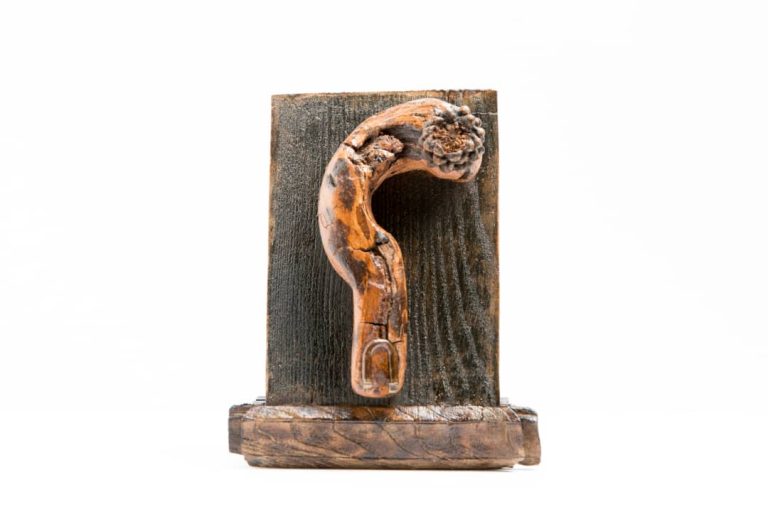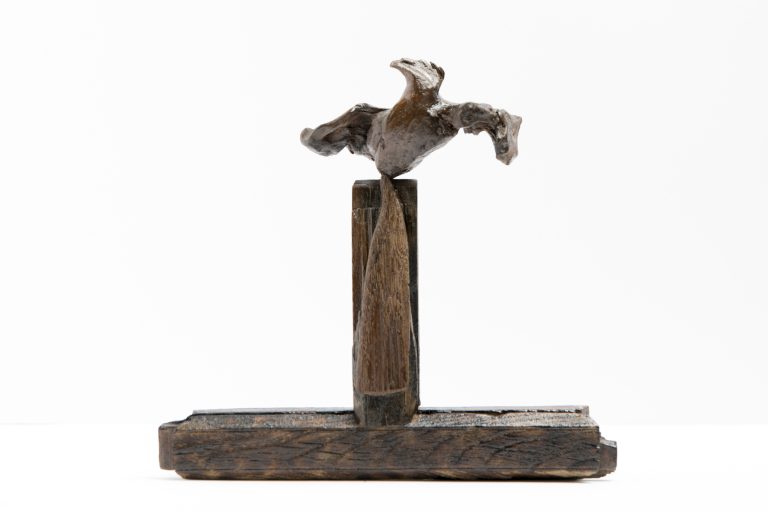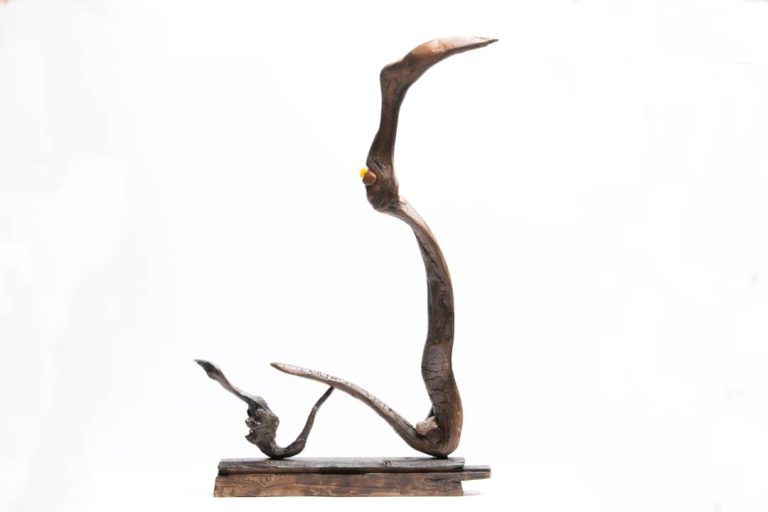
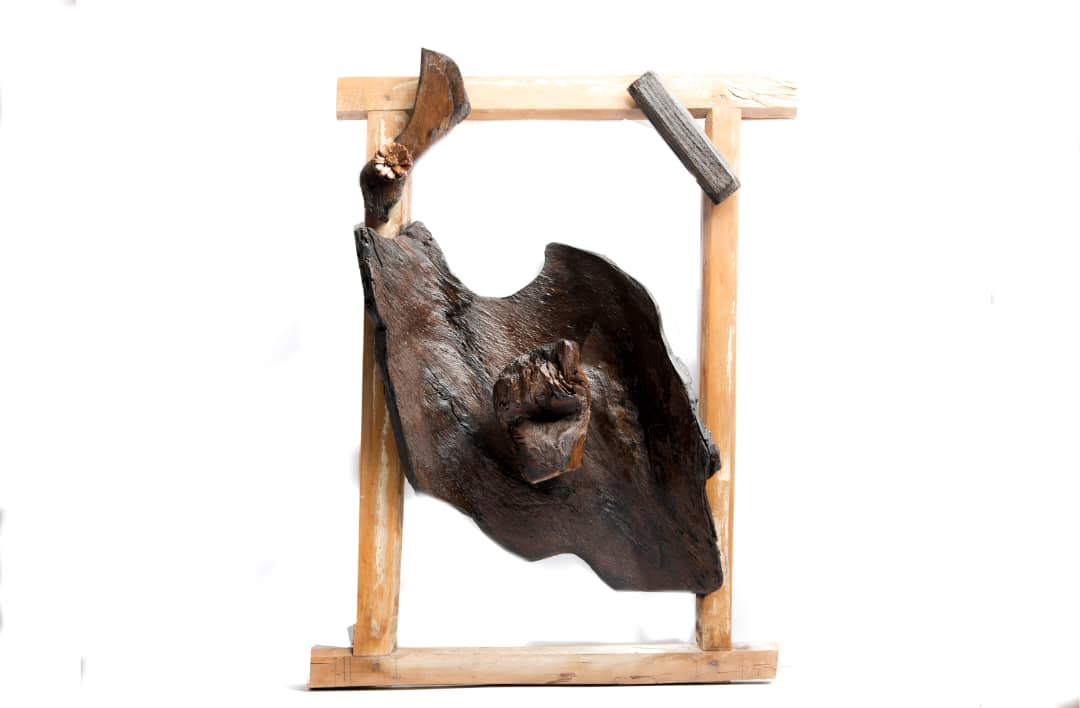
Description: ‘In the Frame of Wound and Hope’ captures the essence of contemporary Iran — wounded, shrouded in mourning, yet unbroken. The clenched fist rising from the darkness symbolizes defiance and resilience. The wooden frame echoes the cracked walls of forgotten homes. This sculpture embodies not a single person, but a nation: standing on pain, looking toward liberation.
This sculpture is not merely a clenched wooden fist — it is a visual narrative, a portrait of a wounded yet standing Iran. The outer frame evokes a family portrait or a sealed window. Yet inside, a solitary fist rises from darkness: a symbol of protest, defiance, and hope carved into despair.
The choice of materials — coarse wood, dark paint, and raw textures — emphasizes the pain and unrest embedded in the piece. This is not an abstract form; it feels like a fragment of history — born from unrest, public mourning, and the muted cries of those who demanded to be seen.
Unlike a conventional frame that preserves or beautifies, this frame acts as both barrier and witness. The fist inside it does not punch out; it stands within, asking, insisting, enduring.
One cannot help but see in it a silent monument to movements like that of Mahsa Amini, whose name became a symbol of both national grief and enduring resistance. Ultimately, In the Frame of Wound and Hope is a sculpture of dichotomy — one that captures the persistent duality of modern Iran: sorrow and strength.