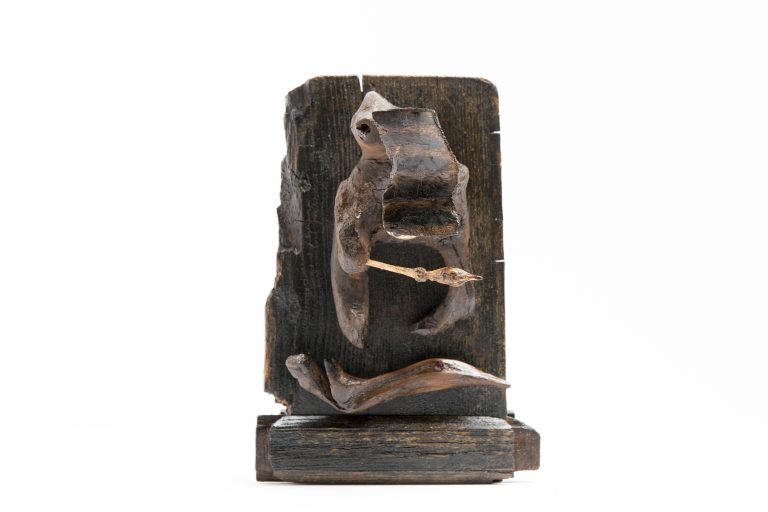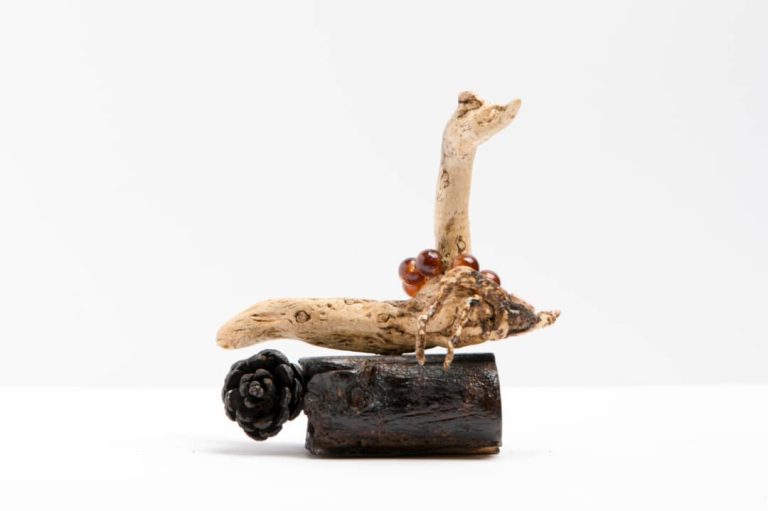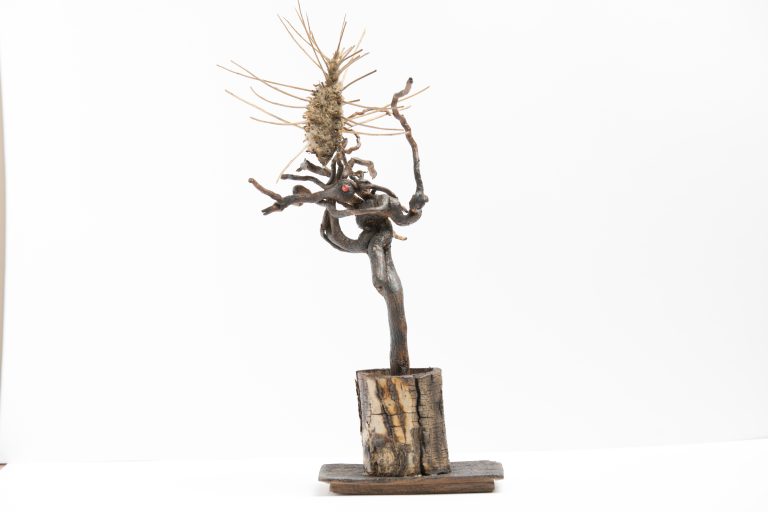
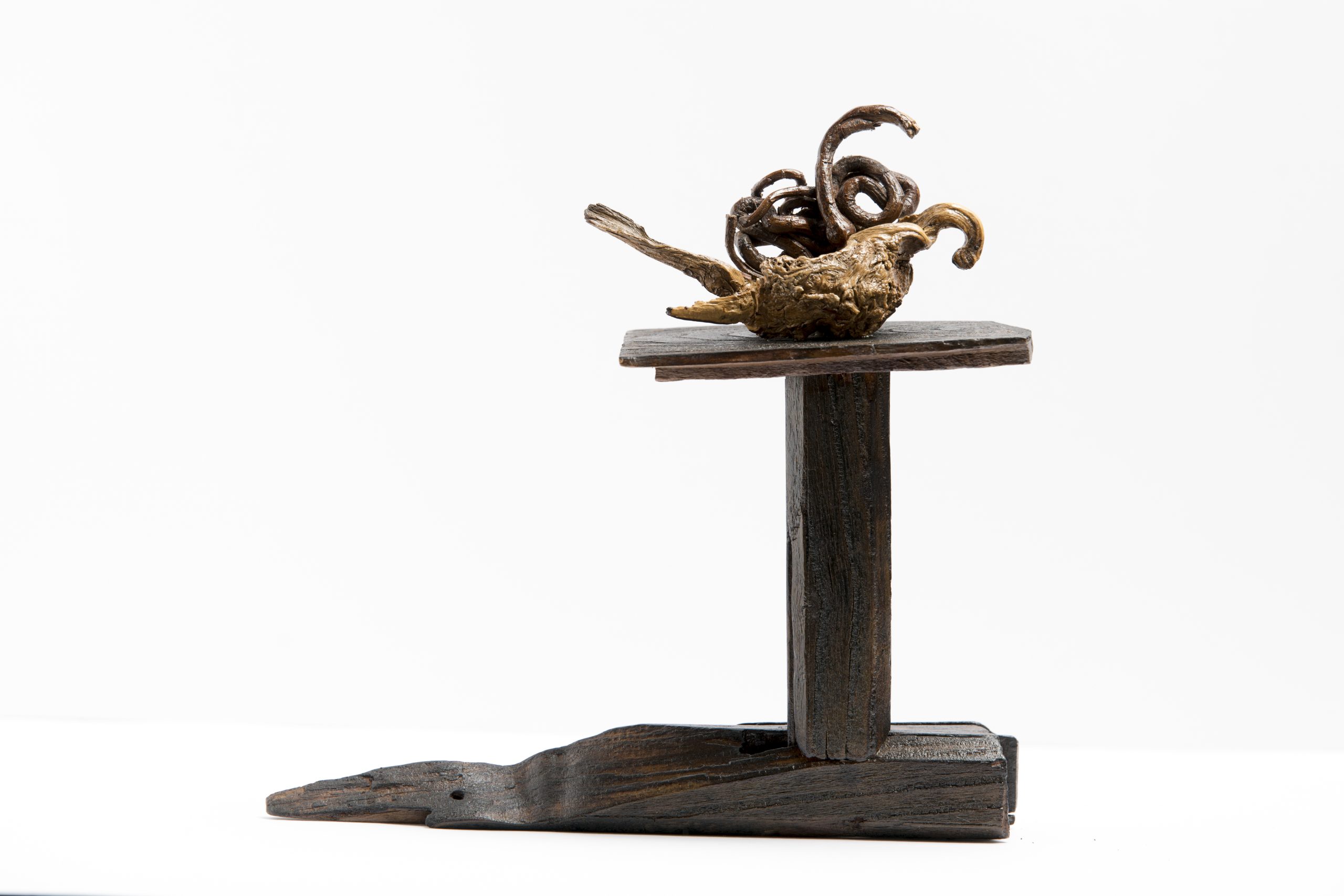
Description: A coiled, seductive form rests upon a platform that is both throne and trap. What at first resembles a bird reveals itself as a chained illusion of power—decorative on the outside, dominating from within. This piece symbolizes hidden deceit in positions of control.
At first glance, the sculpture deceives —
not out of dishonesty, but with the pure honesty of seduction.
A coiled, bird-like, organic form rests atop a smooth pedestal, as if crowned with elegance and calm.
But the longer one looks, the more unsettling it becomes:
Is this creature seated upon the throne — or is it the throne itself?
It is beautiful, but not safe.
Still, yet predatory.
Layer One: The Display of Power
The base below is the throne — the seat of authority.
The twisting form above may first appear like a bird, a symbol of freedom.
But this bird does not fly.
Not because it cannot — but because it chooses not to.
It feeds on control, not sky.
Here, beauty becomes a tool of domination.
The organic form conceals a deliberate gesture of control.
Layer Two: Deception
Throne of Deceit is a masterful depiction of the tension between appearance and reality.
Its delicate elegance invites the viewer.
But with every step closer, the audience begins to realize:
This is not an offering — it is a trap.
Like promises wrapped in charm,
this sculpture seduces with form and then binds with meaning.
Layer Three: Voluntary Servitude
The work poses a vital question:
“Is all domination imposed — or can it be chosen, even desired?”
This sculpture implies:
“Modern slavery is offered with beauty, softness, and a sense of belonging.”
It forces the viewer to reconsider their own place within systems of power.
Final Reflection
Throne of Deceit is not just about external power —
it is about the throne we accept within ourselves.
The one we admire, touch, celebrate —
only to realize it has chained us in silence.
This sculpture becomes a mirror for all the systems we worship as crowns,
but which, in truth, are our quietest prisons.