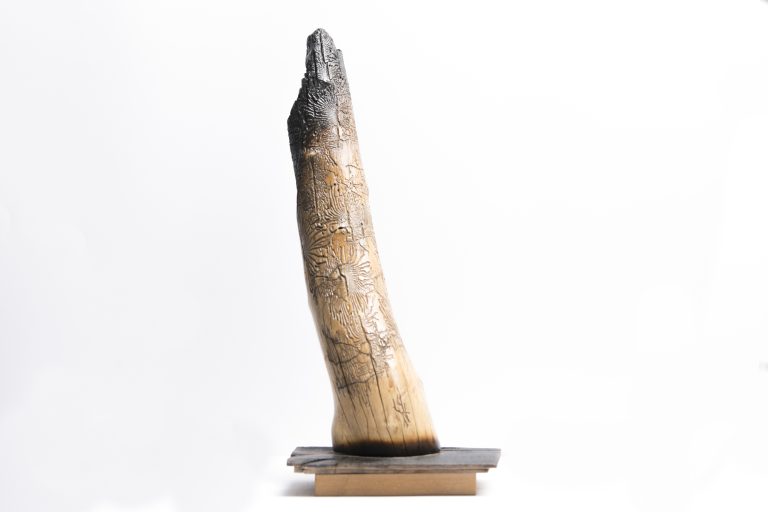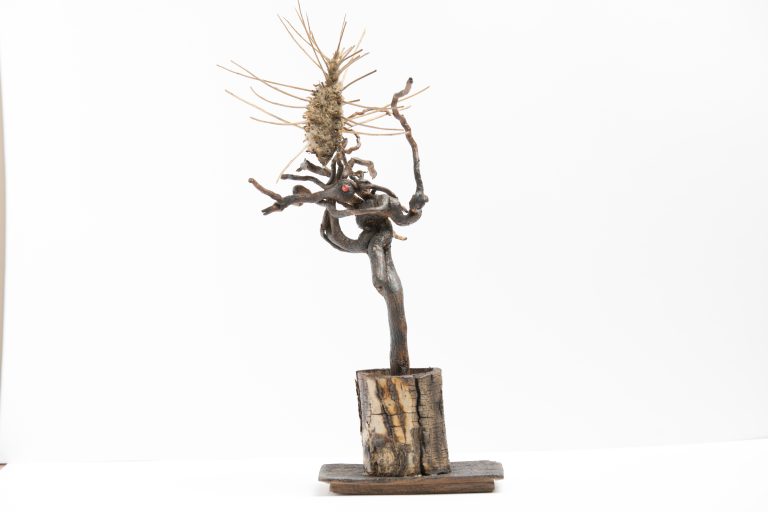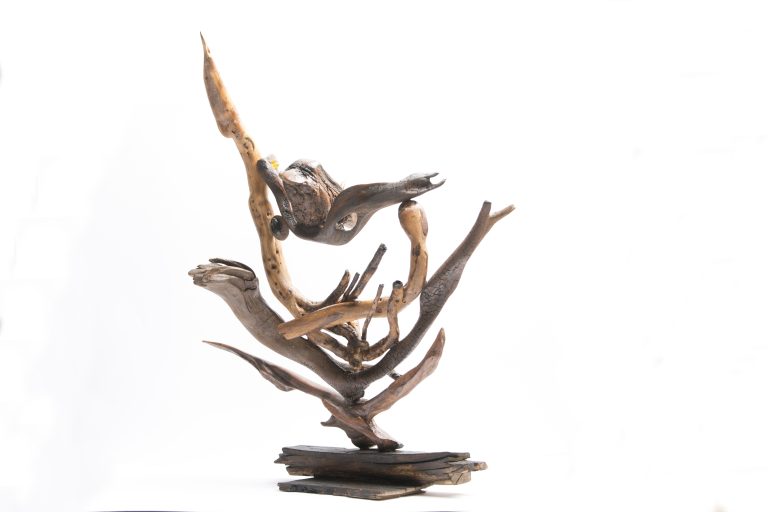
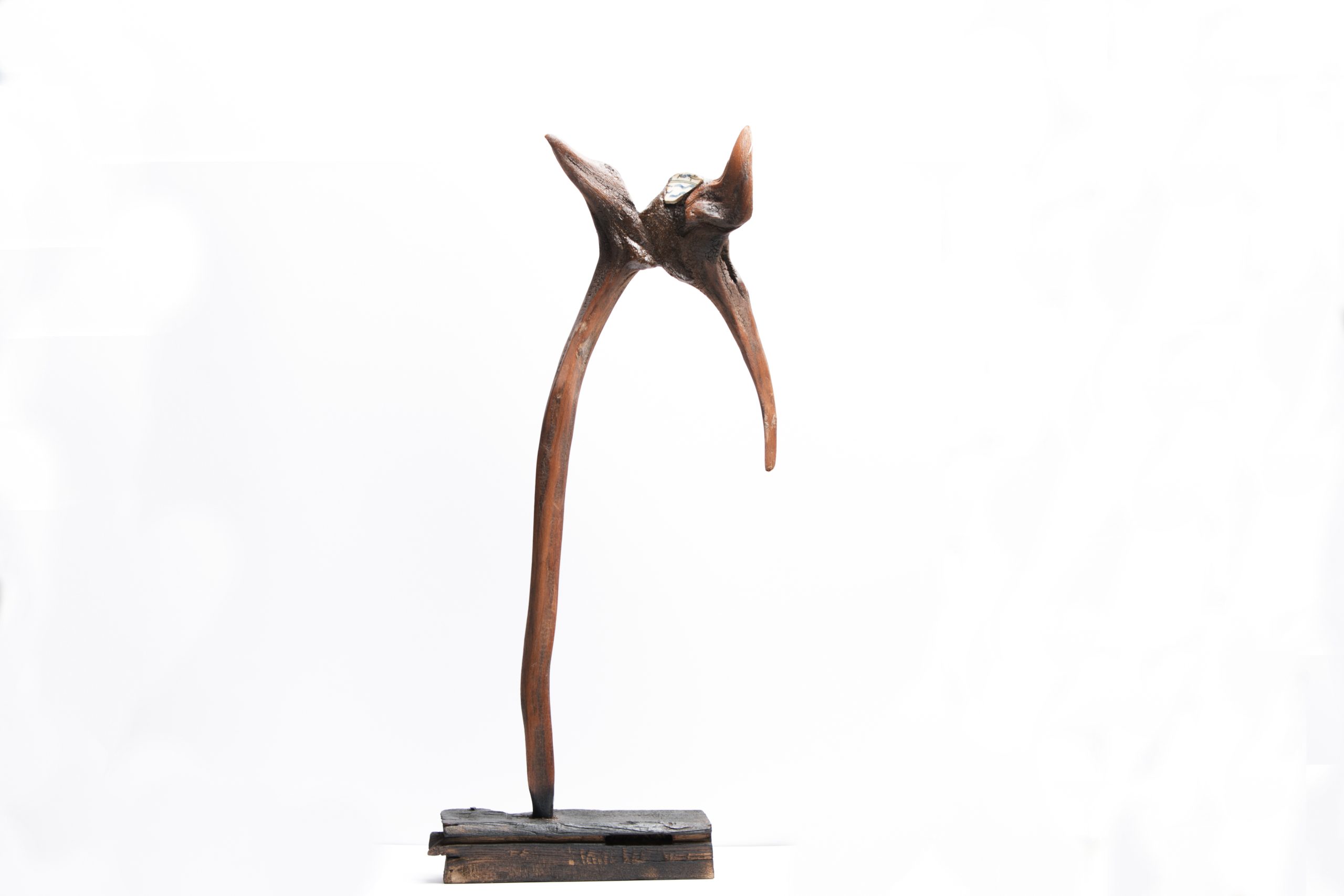
A slender, ascending figure with two upper branches that open like wings or converging gazes. This sculpture captures a moment just before flight—neither fully free nor still confined. It stands at the threshold between earth and sky, solitude and connection, stillness and release.
Artistic and Conceptual Critique: The Threshold of Flight
This sculpture is neither a bird, nor a human, nor an object.
It is the moment when all three prepare to leave the ground.
A slender, ascending form with two open arms at its peak — not symmetrical, but perfectly balanced.
They resemble converging gazes, or wings about to lift in shared motion.
Layer One: Form and Geometry
The central body rises gently from the base with a subtle curve.
It doesn’t appear heavy — its bend is not from burden, but from a desire to ascend.
It seems to leave the earth with respect, not resistance.
Its near-symmetry feels alive — like nature itself: never perfect, yet always in harmony.
Layer Two: Meaning and Psychology
This sculpture captures the moment before flight —
“When you’re still rooted, but your heart has already moved.”
It becomes a metaphor for a person on the verge of change, transition, or union —
still suspended.
And in that suspension, there is both hope and fear.
That tension is what makes the piece so human.
Layer Three: Shared Uplift
The artist notes:
“Together, we are joyful and take flight.”
This phrase animates the work.
It is not merely about the individual — it is about coexistence.
Two wings, two arms, two souls —
not meant to fly alone, but only by being together.
Final Reflection
The Threshold of Flight is not a sculpture — it is a moment in time.
A moment between stillness and movement, between solitude and connection.
It does not show flight or fall —
it shows the threshold of decision.
And perhaps, that is where the truest version of the human spirit begins to rise.