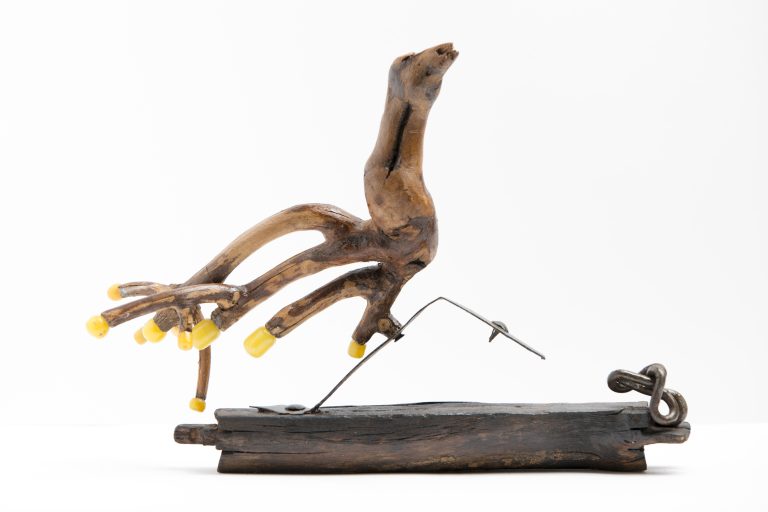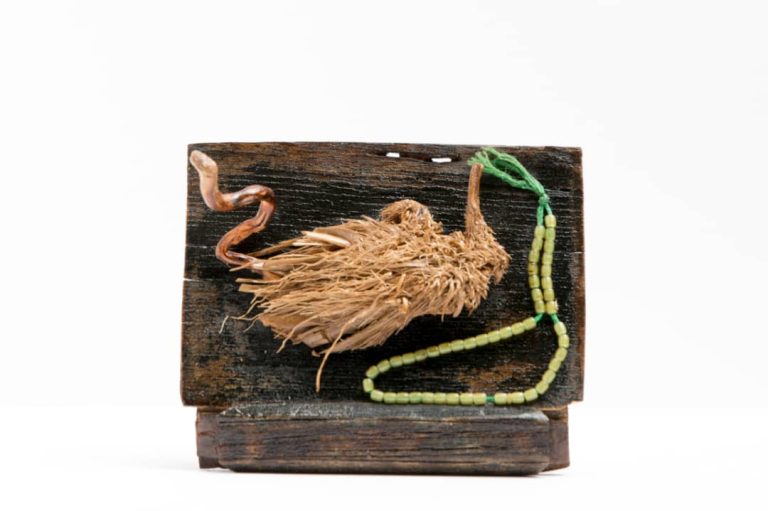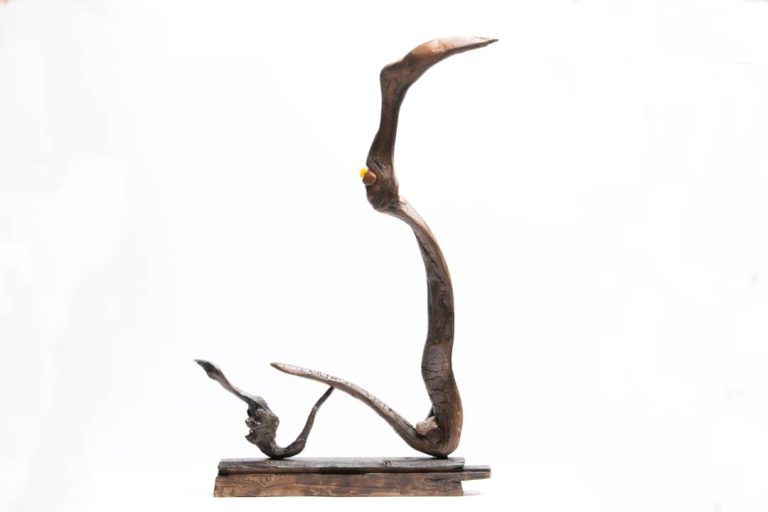
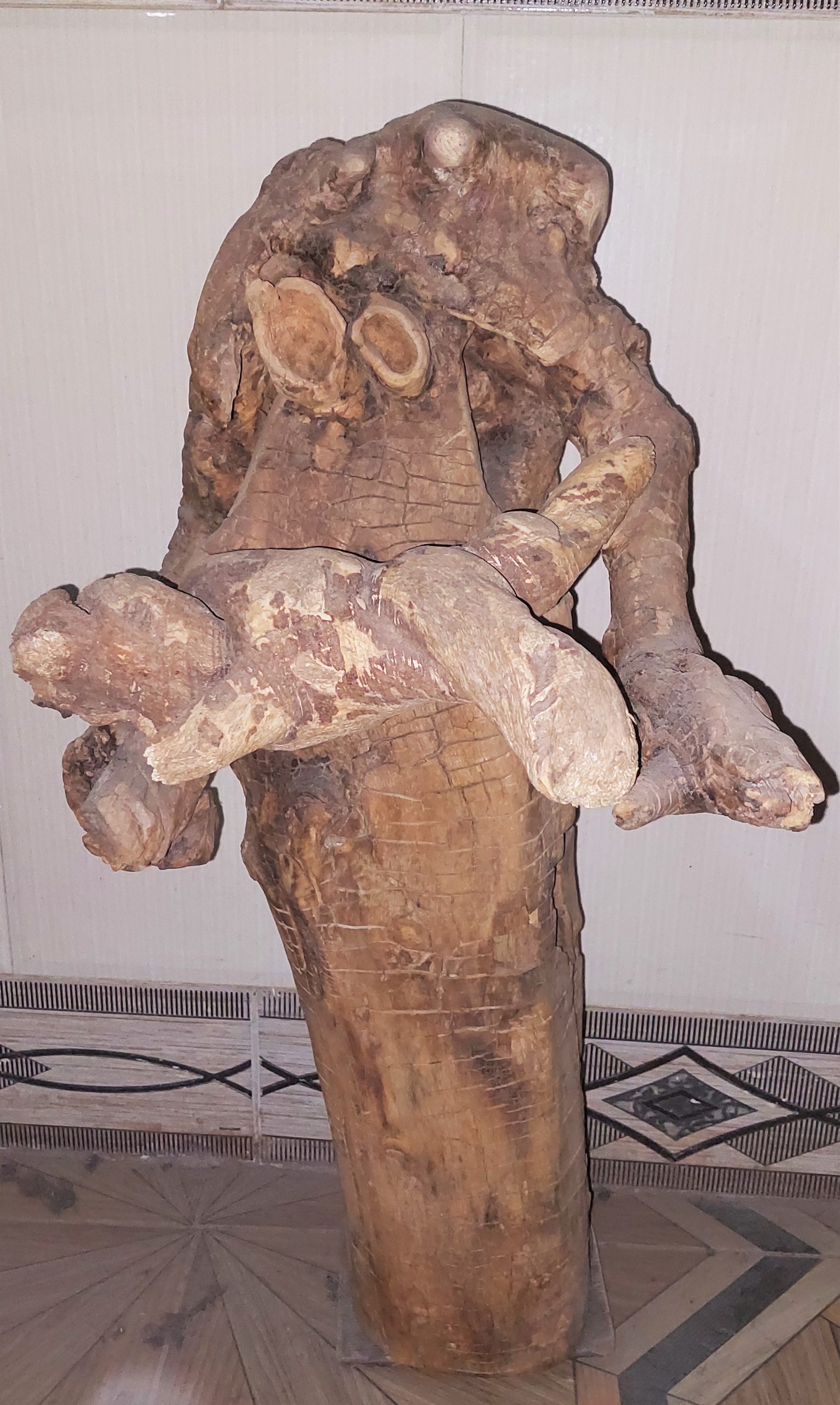
Description: A faceless, weighty figure holding a child-like victim in its arms. *Cold Offering* captures biological cruelty—where a virus, without rage or mercy, consumed innocent lives.
Form and Structure
Cold Offering rises as a faceless, massive figure—sculpted from raw, cracked wood. It holds, with rigid arms, a smaller, child-like form—fragile, curved, almost lifeless.
There is no gesture of embrace. No expression of violence either. Just a silent, indifferent presentation: the child as an offering. Not to be saved, not to be mourned—only handed over.
This structure’s chilling stillness becomes its most powerful voice. It speaks of a system, not an act. Of machinery, not emotion.
Theme and Philosophical Perspective
This sculpture encapsulates a tragic truth of modern catastrophe: the horror of indifference.
Cold Offering does not depict evil in its traditional form. Instead, it shows something more terrifying—a force that operates without feeling. Like the virus it represents, the central figure neither hates nor loves. It simply acts.
The child it holds stands for countless innocent lives consumed by systems too vast, too abstract, and too numb to acknowledge the weight of a single story.
Material and Technique
Rafati chooses rough, untreated wood—its surface fractured, organic, and unapologetically raw. This choice reinforces the sculpture’s emotional gravity.
Rather than relying on facial expression or literal anatomy, the composition derives its meaning from form and posture. The child figure seems absorbed into the parent trunk—without identity, without protection.
This is not ornament. This is a structure of loss.
Emotional Impact
The piece does not demand sympathy. It commands recognition.
It places the viewer in a silent funeral—with no names, no flowers, and no tears. Only wood. Only weight.
Only the question:
What have we become, that this is how we remember?
Conclusion
Cold Offering is not just a sculpture about a virus—it is a sculpture about how humanity forgets.
Rafati shows us a world where grief is generalized, and loss is too vast to name.
Where children become statistics.
And where history might move on—unless we choose to witness.