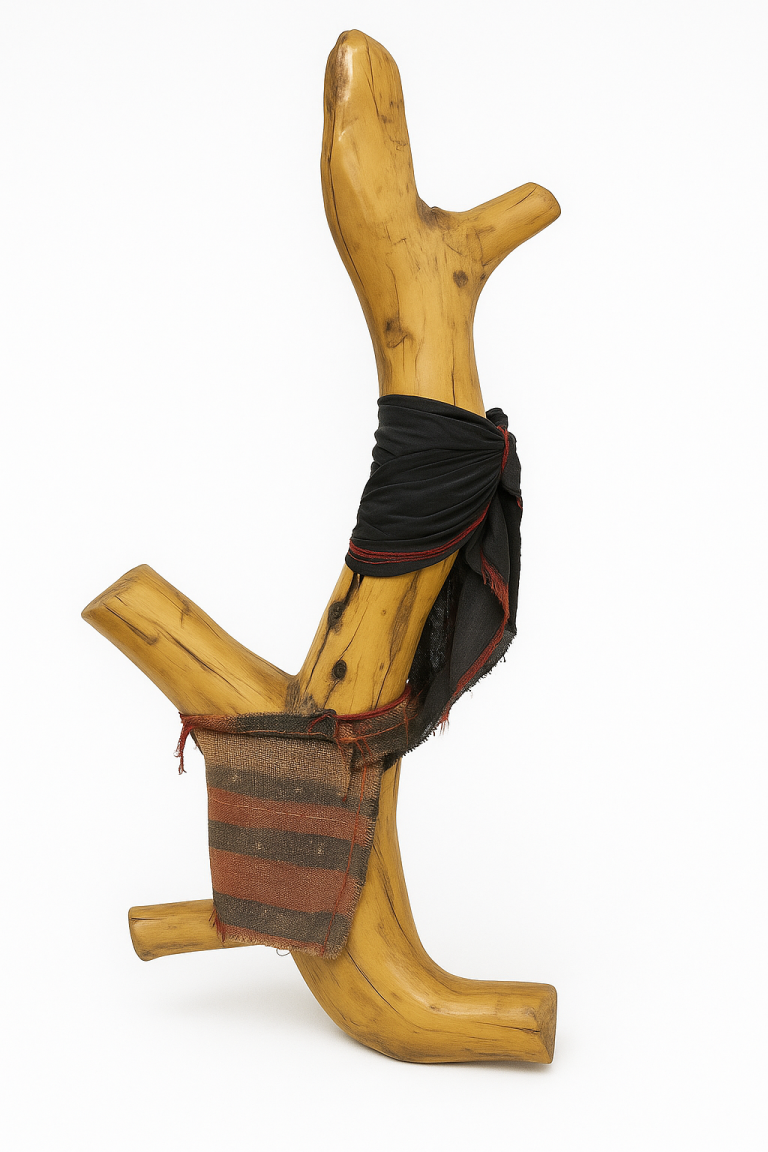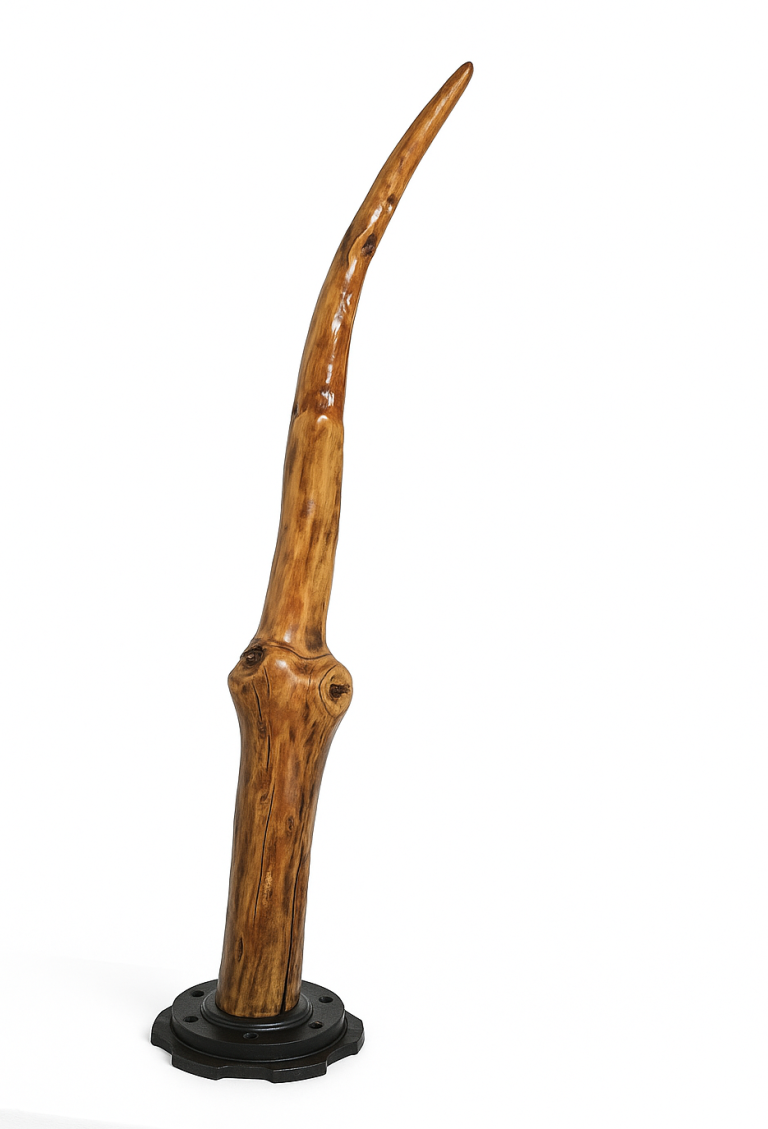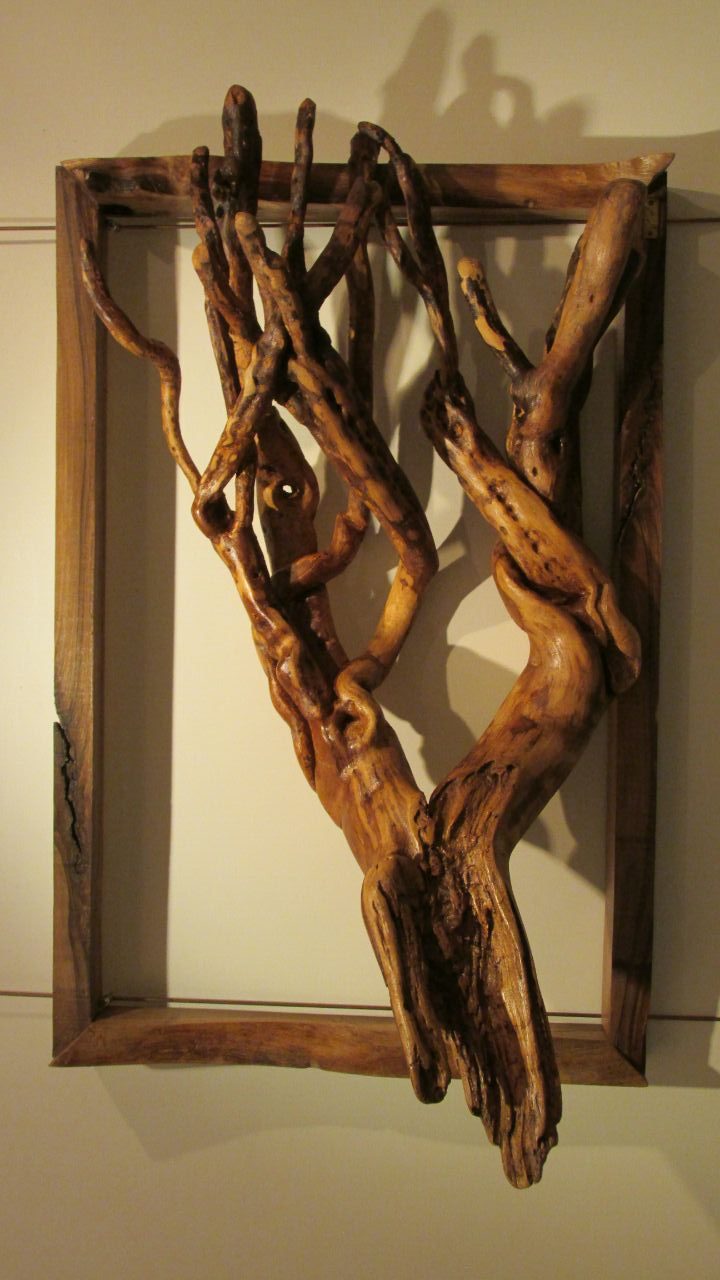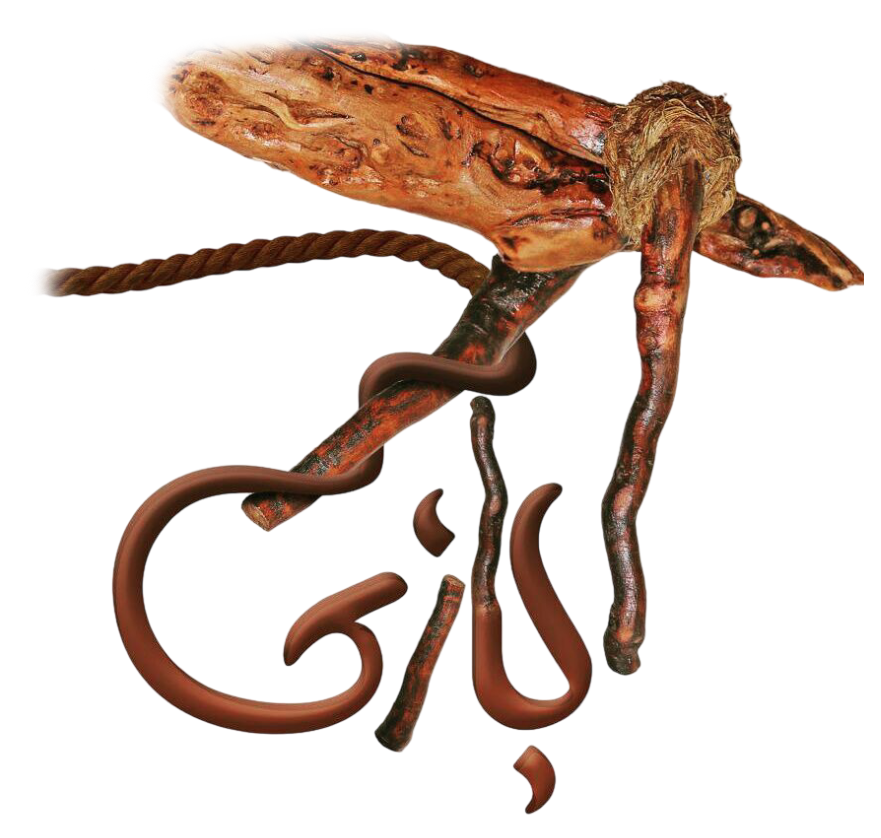
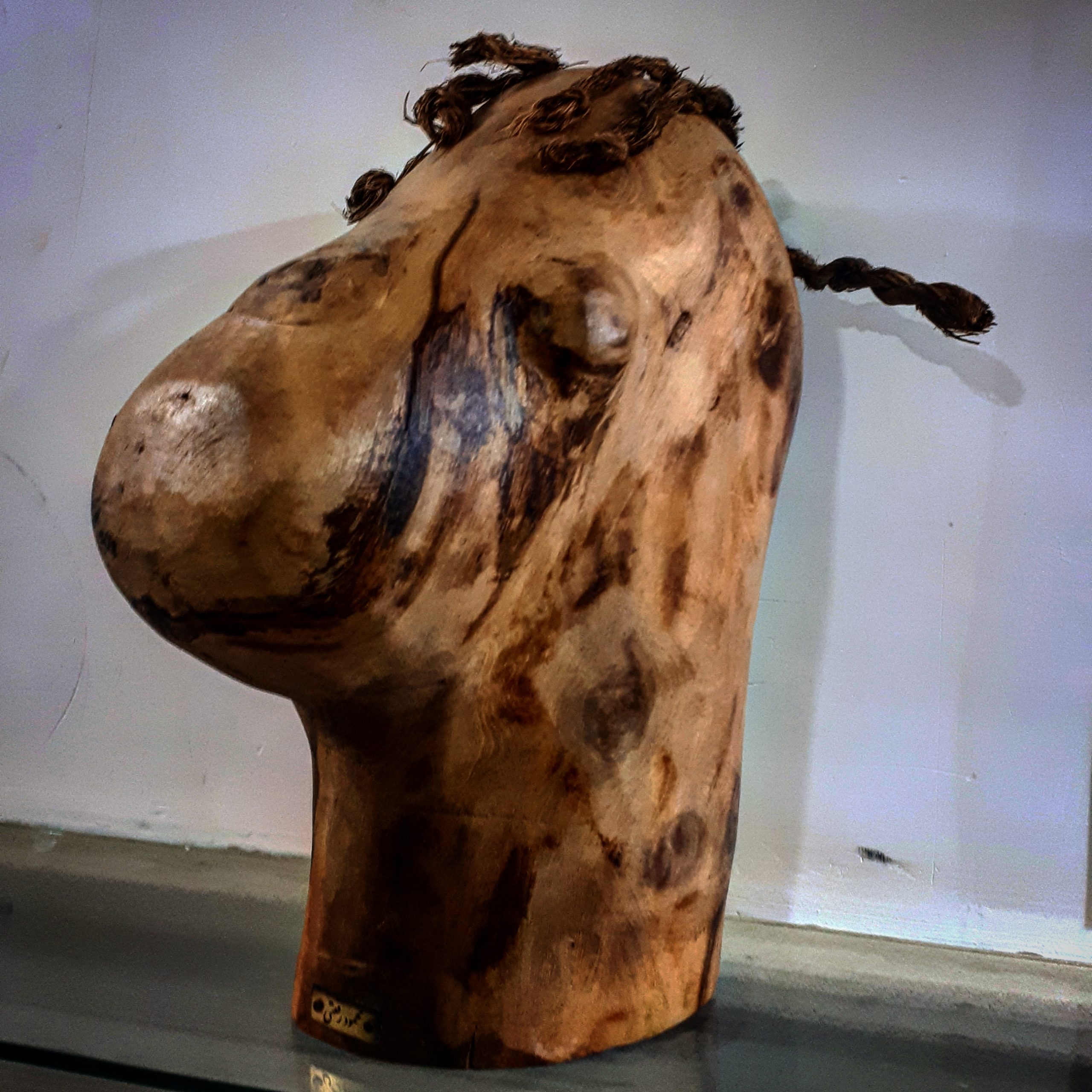
Description: This sculpture presents a distorted head—part human, part animal, eyeless and voiceless. Yet despite its altered form, it carries a sense of calm and innate grace. The wooden shape is rounded, subdued, and humble; the braided rope hair is unadorned, modest. The title *Grace in Deformation* suggests that even amid the collapse of identity, something noble may still remain.
Form and Structure
This sculpture presents a large, smoothed head—eyeless, mouthless, undefined. The form no longer resembles a human face, yet carries something unmistakably alive. It is not animal, not fully human, perhaps something in between—a silent, mythic hybrid.
The surface is rounded and gentle, yet textured with cracks, knots, and natural scars. Atop the head, strands of braided rope serve as hair—not styled or adorned, but simply present—as if echoing a memory of what once was human.
Theme and Symbolic Interpretation
The title Grace in Deformation captures the central paradox of the work:
This is a being that has lost its identity, its form, perhaps even its voice—
but not its dignity.
The sculpture tells us:
- You may no longer look human—but still be noble.
- You may lack eyes—but still see.
- You may be distorted—but remain calm, composed, and whole inside.
This is a figure that has endured cultural, psychological, or existential collapse—and yet stands, not in despair, but with quiet grace.
Material and Visual Language
The polished, natural wood speaks with honesty. Its knots and grooves are not concealed—they are part of its voice.
The rope “hair” is rough and modest—serving not to embellish, but to hold on to a thread of identity.
There is no pretense, no drama. Only weight, silence, and reverence.
Emotional and Psychological Impact
The sculpture evokes empathy—but not pity. There is no screaming, no suffering.
Only a stillness that confronts the viewer:
What remains when identity is stripped away?
And somehow, this figure answers:
A center.
An anchor.
A form of grace that needs no mask.
Final Reflection
Grace in Deformation is a portrait of what remains after transformation.
Not a descent into savagery—but a return to something essential, quiet, and strong.
A testimony that dignity is not a trait of form or face—but of presence.
This sculpture does not ask for attention.
It simply remains.
And in doing so—it teaches.