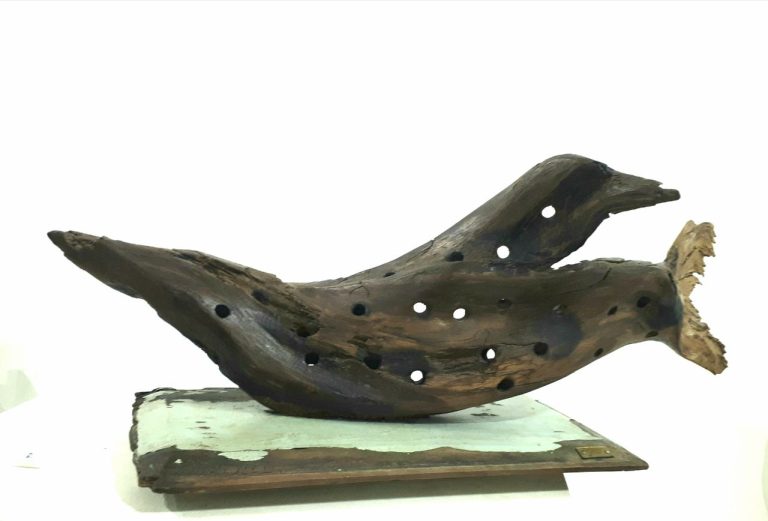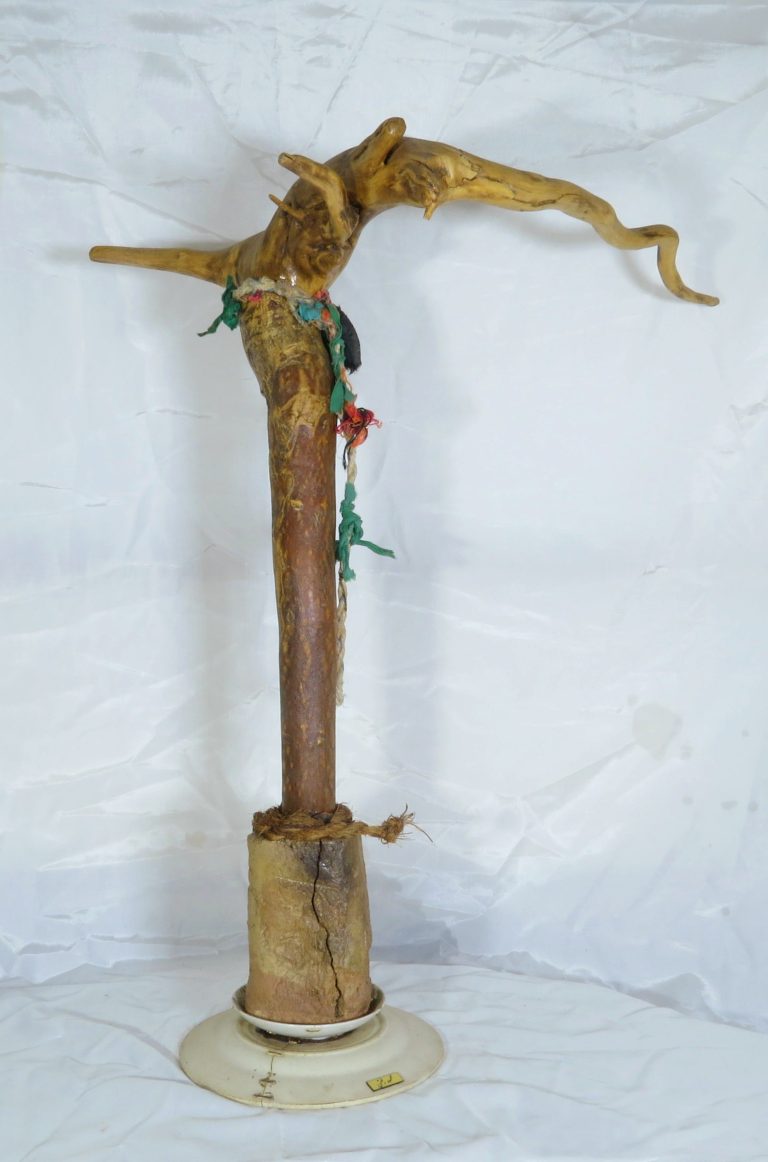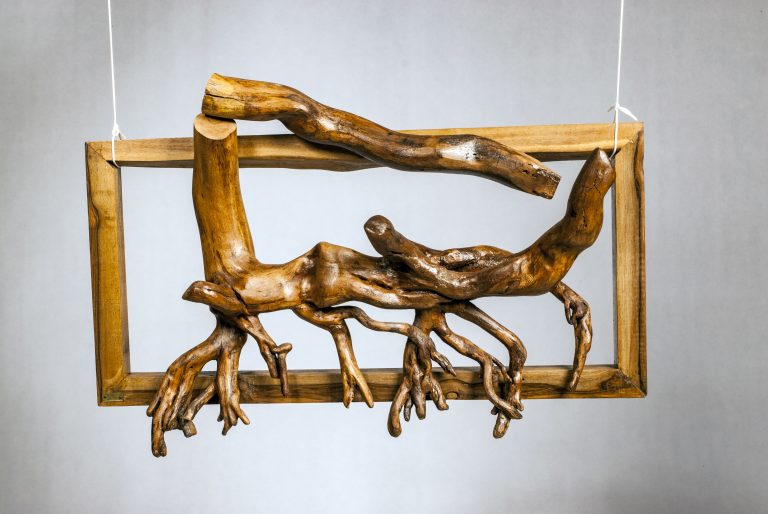
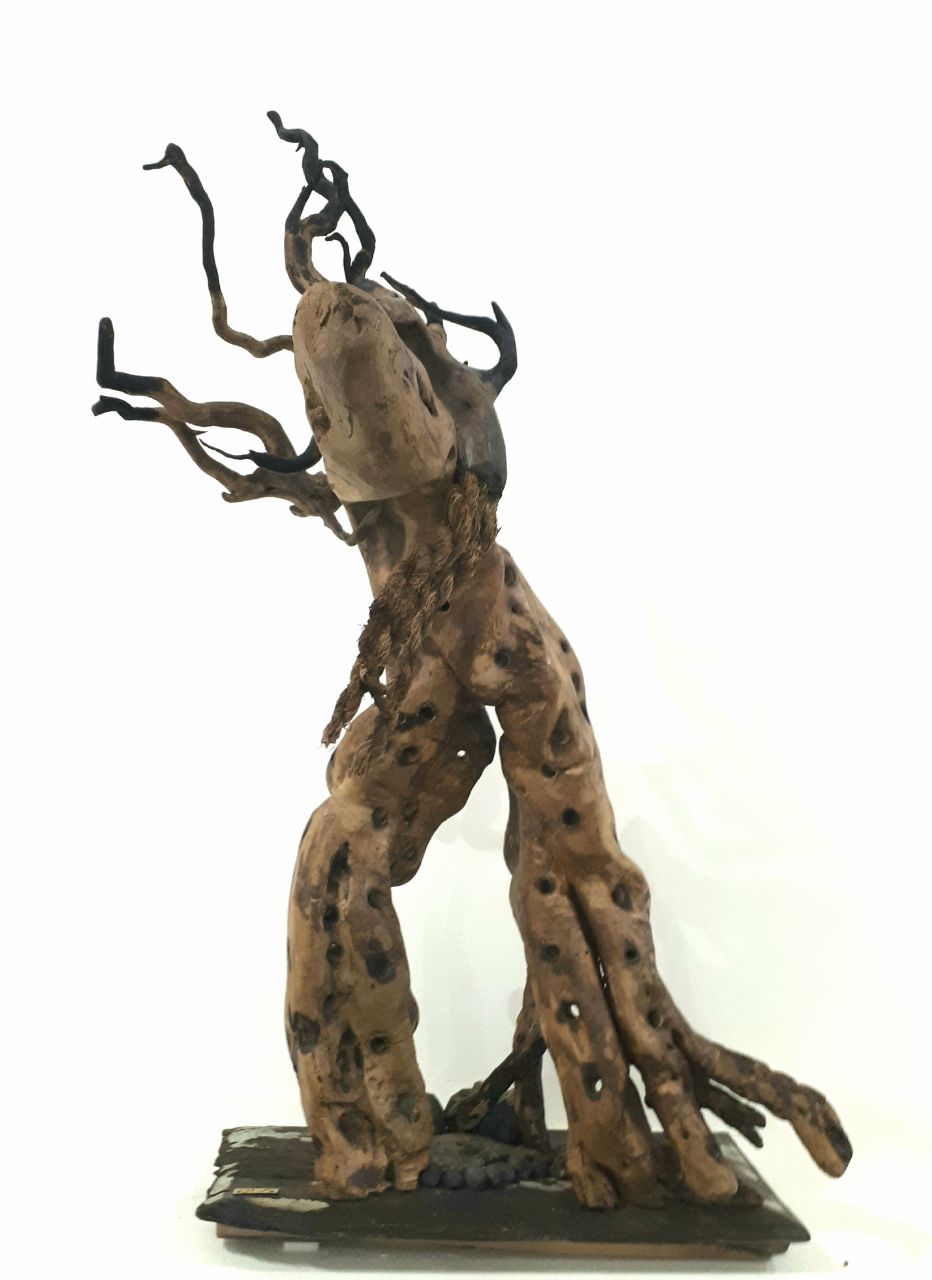
Description: A twisted, scarred form with dry branches and a hollowed body; *Elegy for the Forgotten* embodies Afghanistan—a land present on maps, yet absent in global memory. A lament for a nation sacrificed and unseen.
Form and Structure
Elegy for the Forgotten stands like a figure half-alive, half-erased—scarred, hollowed, leaning forward yet still upright.
Its body is pierced, its limbs are scorched branches, frozen mid-motion like flames extinguished without light.
This is not a human figure. It is a nation embodied.
It walks—or falls—on two bent legs, suspended between survival and collapse.
Theme and Philosophical Perspective
This sculpture is not only a tribute. It is a silent scream in the name of a people erased from the world’s memory.
Afghanistan is not represented here as a political entity, but as a symbol of collective human suffering—a body ravaged by ignorance, fanaticism, violence, and authoritarianism.
The sculpture mourns not only what has been lost, but the world’s indifference to that loss.
It is about the tragedy of being forgotten while still alive.
Material and Technique
Rafati chooses raw, distressed wood—scarred, burned, and full of voids.
There is no ornament here. The aesthetic is pain.
A rope draped around the neck is not dramatic—it is resigned.
Not a noose of fear, but one of exhaustion.
The charred branches resemble dying nerves or petrified cries. They do not glow. They don’t even burn. They simply remain—as reminders of what once was.
Emotional Impact
The figure doesn’t scream. It doesn’t ask to be saved.
It stands.
There is grief in its silence. Its posture evokes a quiet kind of heroism: the dignity of surviving even when no one notices.
You do not just observe this work. You feel its absence—the missing eyes, the absent voice, the hollow core.
And you realize:
This is not a statue. It is someone the world chose to forget.
Conclusion
Elegy for the Forgotten is not a memorial.
It is the forgotten.
It speaks for nations, peoples, and souls erased not by death, but by neglect.
Rafati does not ask you to remember them with words.
He asks you to look—
and never look away again.