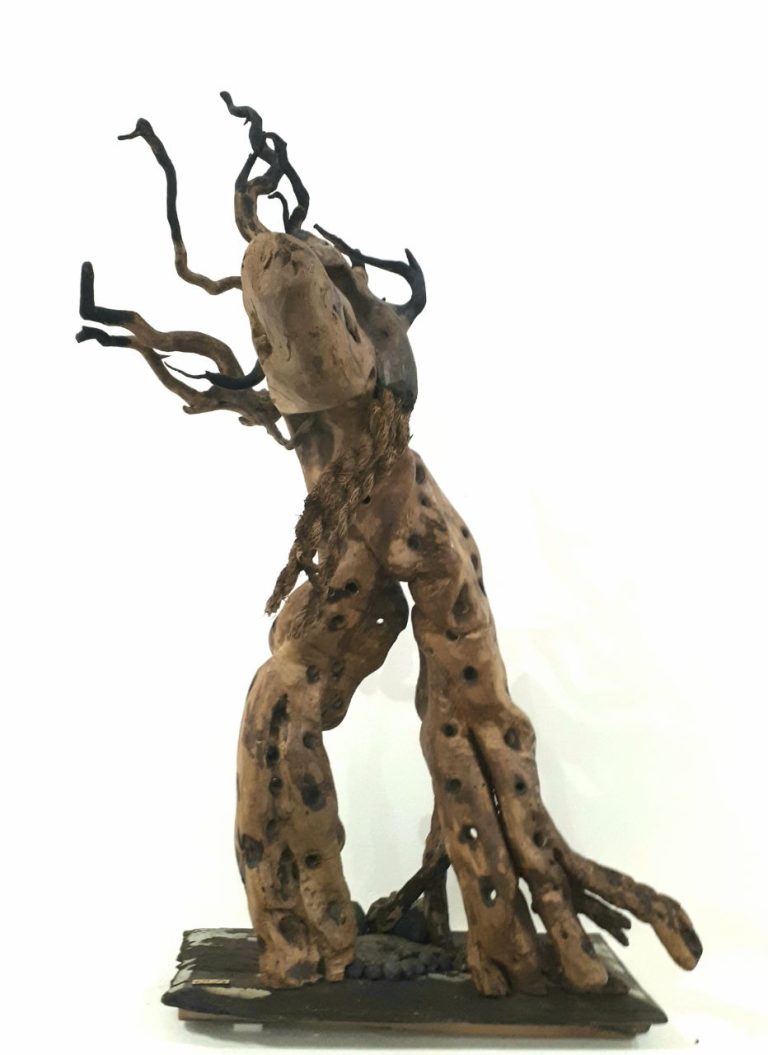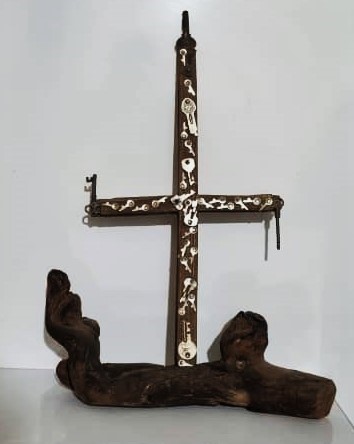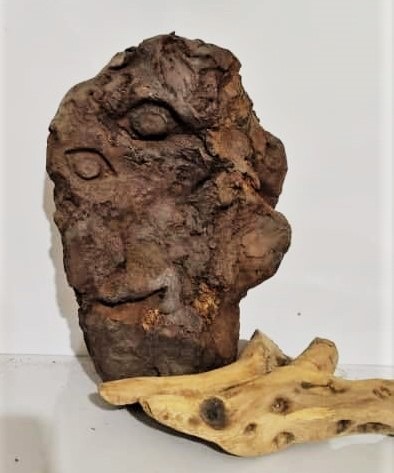
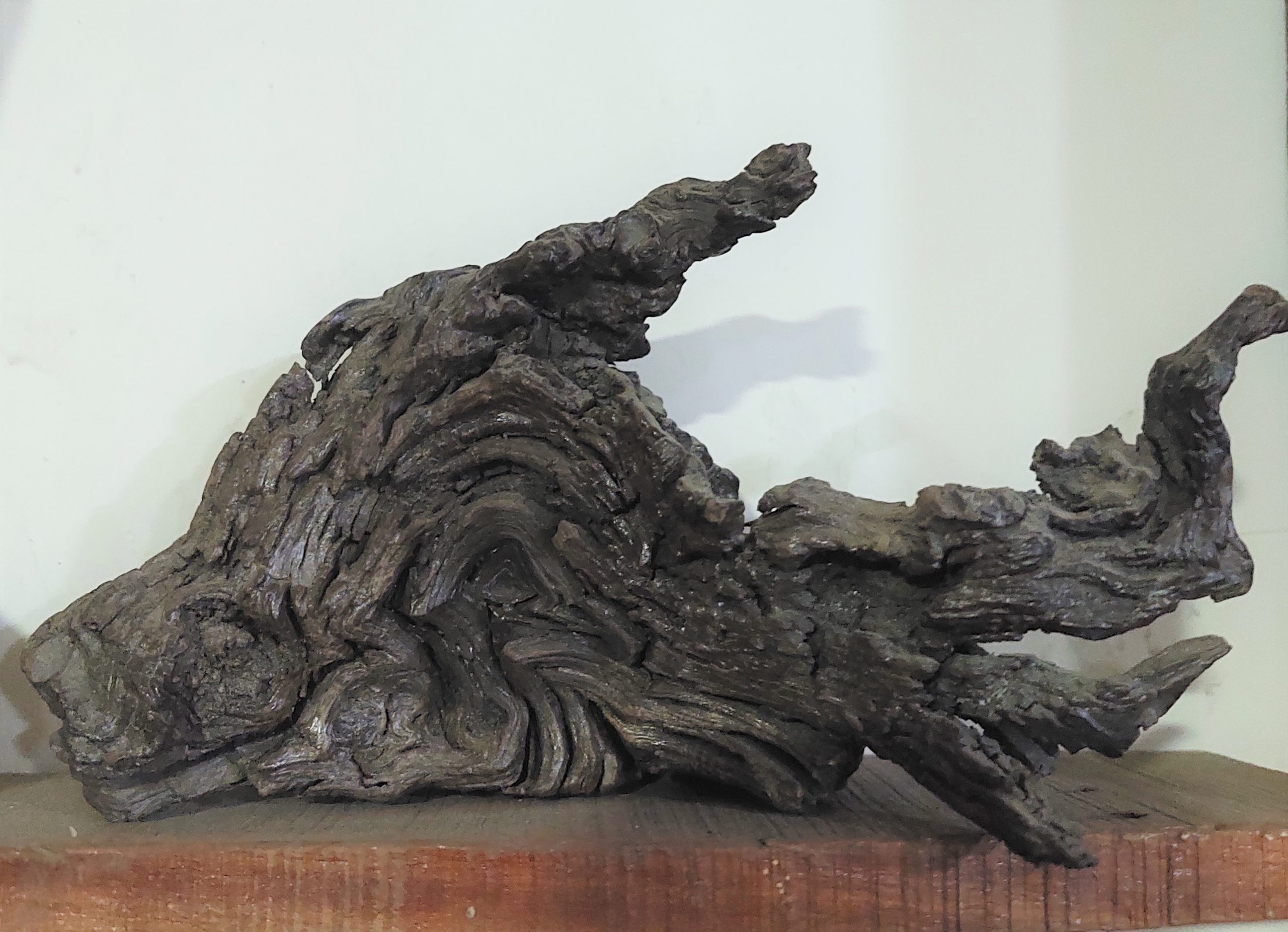
This sculpture evokes the figure of a fish—not in motion, but in stillness. A dry, twisted form with lines that recall the flow of water and the body of a fish—now trapped in dryness. *Fish Without Sea* is a metaphor for the pain of separation from one’s origin, for the memory of water in a body that can no longer reach it.
Form and Structure
At first glance, the sculpture resembles a dried-up fish—its body curved, the compressed grain lines suggesting movement, with protruding branches that evoke fins or memories of swimming.
This dark, hardened wooden form seems fossilized rather than alive, yet beneath the surface, traces of flow and memory remain.
The sculpture embodies both stillness and restrained motion—like a moment where the sea has withdrawn, and the fish is left behind.
Theme and Philosophical Lens
Fish Without Sea is a meditation on disconnection from origin.
The fish symbolizes freedom, vitality, and flow. Here, it is severed from the sea—not quite dead, but on the edge of oblivion.
The piece becomes a metaphor for a human being separated from their roots, exiled from collective memory or spiritual home.
It reflects the silent resistance of a body displaced from its natural habitat—hovering between life and remembrance.
Material and Technique
Rafati employs wood as a living, already-wounded material—its texture carries its own history and has shaped itself.
Rather than shaping, the artist reveals.
The organic structure of the wood is preserved, with minimal intervention—allowing the piece to speak through its natural scars and lines.
Emotional Impact
The piece conveys both softness and dryness—expressing loneliness, dislocation, and unresolved longing.
At first, it may appear like a stone relic, but with closer attention, the viewer perceives frozen motion and the subtle presence of a once-flowing sea.
This contrast between vitality and dryness evokes a poetic melancholy—a sense of living without belonging.
Conclusion
Fish Without Sea is not just a wooden figure; it is a silent statement on separation, environmental memory, and the ache of survival without roots.
The sculpture is a quiet echo of the sea—contained in a body that still remembers the taste of water.